History
1.1. Garage Knegtel has started
1.2. Ford import starts
1.3. Authorized Service Station
1.4. Ford in the Netherlands
1.5. The Ford Week in Tilburg
1.6. Expansion of the Heuvel
2.1. The next big renovation
2.2. The war years
2.3. Expansion after the liberation
2.4. 25th anniversary
2.5. Temporarily fewer passenger cars
2.6. Next generation takes over
3.1. Ringbaan Oost starts
3.2. Renovation of the Heuvel
3.3. Opening Spoorlaan
3.4. 50th anniversary Ford dealership
4.1. Demolition of the Heuvel
4.2. Dongen branch
4.3. Bankruptcy
4.4. Demolition of Knegtel site

1913 - 1930: Construction
1.1. Garage Knegtel has started
Fascinated by the successful use of combustion engines in motorcycles and cars, Theo sought a career in that direction. After his school days he joined the company Jos van der Schoot-Hoofs, manufacturer and importer of 'Les Fils des Peugeot-Frères' bicycles. After this he followed a theoretical-practical training in Amsterdam in the automotive industry. The last stage in his apprenticeship was an employment with the company Vlemmincx in Geldrop. This company was an importer of the House of Sarolea from Liège, at that time leading manufacturers of small cars and motorcycles, and of "Moto-Sacoche". After working for a few years in Geldrop, Theo had acquired a solid wealth of knowledge and experience, so he dared to take the big step to become an independent businessman.
On February 5, 1913, the then 19-year-old (i.e. minor) Theo made a memorable signature at the notary AAM van Zijl, granting him guidance to start a company. On February 28, 1913, he opened his first workshop at Heuvel 44, behind his parents' bakery. It was a “Company for the trade and rental of automobiles (Adler) and (motor) bicycles, their repair and the supply of parts”. Since there were only a dozen of these means of transport in Tilburg and the surrounding area, it was also possible to rent a car with driver from Theo.
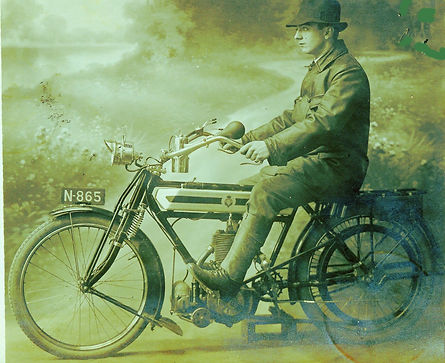
Theo on Hazlewood motorcycle in 1911. The license plate comes later on cars back. See under 'Other photos - Rallys.
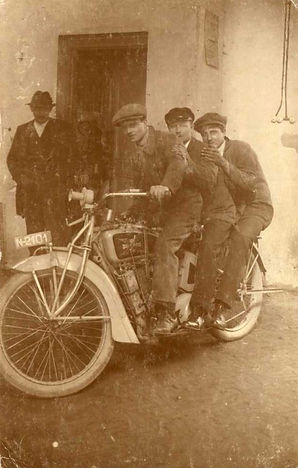
Theo in the middle on a 1917 Excelsior motorcycle
with Ed Lepelaers in front and Chef Broeckx in the back.
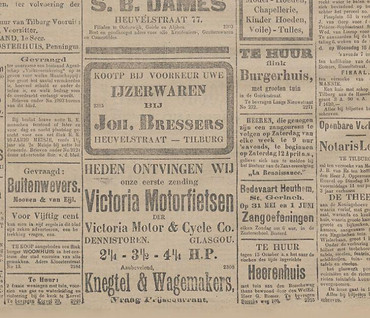
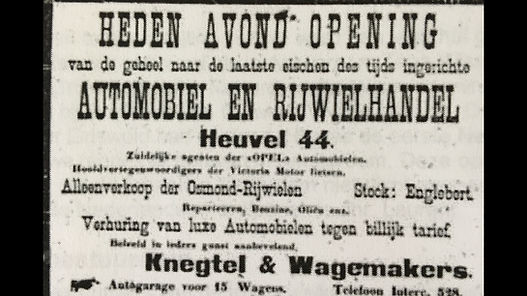
Together with his technical partner Leo Wagemakers (1883-1950) he started a garage on June 1, 1913 under the name "Knegtel & Wagemakers", with the aim: “trade in, repair and rental of automobiles, motorcycles, bicycles and everything that belongs to the profession in the broadest sense”.
They are then southern agents for Opel and Victoria motorcycles and Osmond bicycles. In the announcement of that opening there were 'Spijker Landaulettes, Limousines and Studebaker Torpedoes' for sale. In that year they were also officially appointed as agents of Opel automobiles.
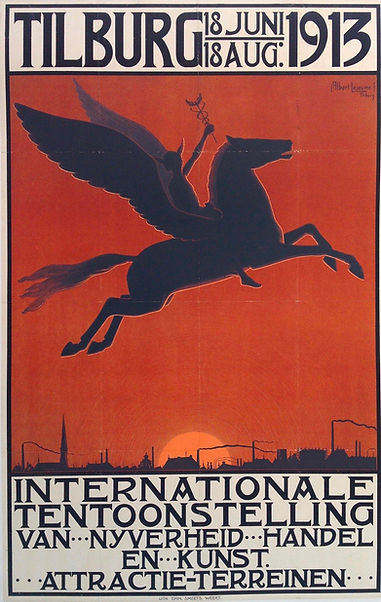
In the same year, the International Exhibition of Industry, Trade and Art was organized in Tilburg on the occasion of the 100th anniversary of the Kingdom of the Netherlands. Toon Kamphuys of the 'Ford Automobile Company' from Amsterdam (see also 1.2.) takes a Ford Model T to the exhibition and sells it to Jacques van Puyenbroeck (and married his daughter!).
Theo also visited the exhibition and was immediately fascinated by the Ford. But for the time being he remained loyal to his previously chosen brands Opel, Spijker and Studebaker.
Unfortunately, the collaboration with Leo Wagemakers was only short-lived, because in December 1915 the company between the two partners was notarized. Leo established himself as a 'car dealer' on the Heuvel no. 99. Later Leo was only known as a mechanic.
Theo decided to continue alone and since there were no successors within the family for the Knegtel bakery, the complete inventory, including the ovens, was passed on to their master servant Sjef Naaijkens. Sjef married the maidservant of the Knegtels, Mieke van Hest.

Deed of sale of Hill 44 to Theo
Theo bought the property from his mother and then had the front house of his parental home, behind which he had the garage, demolished and built new premises. His mother moved with son Toon (see under family) to Heuvel nr. 84.
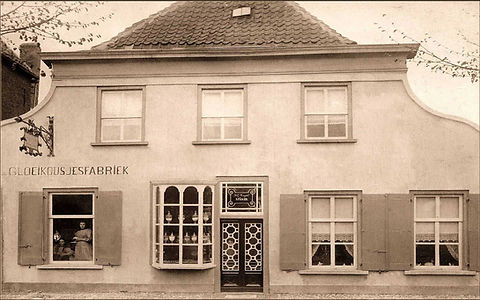
Theo had the building with the characteristic front, which his grandfather had built against it, demolished and turned it into a completely different building. Picture on the right.
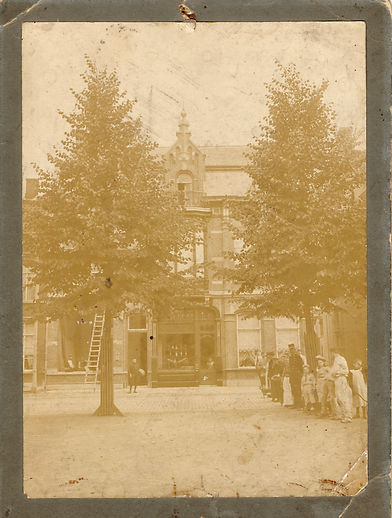

Vegetable garden behind Heuvel 44 , before the construction of Garage Knegtel started. The man with a white smock (right) is baker Sjef Naaijkens. Next to him garage owner Theo Knegtel.

The General Staff of the fourth division of the Dutch Army, then housed in Hotel De Gouden Zwaan, pose on Heuvelplein. The repair and maintenance of this fleet was provided by the automobile company of Theo Knegtel. The middle of the five cars, with registration number H-4865, was issued in the name of the Stable Department of HM the Queen in The Hague. On the car is the royal standard of Wilhelmina. Special in this photo is also the advertising of Hotel De Gouden Zwaan at the top left for "electric light"!
Fun fact: The ancestor of the Knegtels who came to Tilburg, Joseph Christoph Knechtel (born 22 February 1722 in Parchen, Bohemen) stayed at the inn 'De Gouden Zwaan' and married the daughter of the innkeeper Johanna Botermans on 17 May 1746.
The First World War is now in full swing. The Netherlands has remained neutral, but mobilization has taken place. The army had to be ready in case the Netherlands became involved. In connection with the security of the Dutch-Belgian border, General Weber and his staff of the fourth division of the Dutch Army stayed in hotel De Gouden Zwaan on the Heuvel. A large number of cars from the nearby Garage Knegtel were requisitioned by the military and housed there in the workshop.
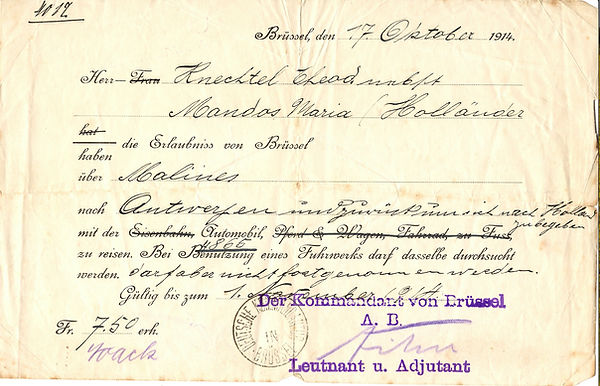
At that time, Theo needed permission from the German occupying forces to pick up a cars in Antwerp. Below is an example of such a pass when he and his sister Miet went to Antwerp.

1914 - Workshop and showroom: 2nd from the left Ruts, 2nd from the right Jan-Bestens
One of his very first customers was Eduard van Spaendonck, who bought a Panhard-Levassor. The number plate N-9 is one of the number plates that were used by the garage to temporarily number customers' cars. The agreement that was made with the purchase was that Theo would be a driver if Eduard had to be 10 km outside Tilburg. The underlying reason was that many tires were punctured, which Theo then had to change. Until their deaths, Eduard and his wife were given a barrel of motor oil at Christmas.
.jpg)
1.2. Ford import starts
In America, the Ford Model T has now become an integral part of the streets. The T-Ford, and especially the way in which it is produced from 1908, makes the automobile accessible to an increasing group of people there. Henry Ford thought it would be a good idea if the 'carcass' of the car was dragged through his factory and then all the parts could be screwed on. Lika a conveyor belt. Until then, cars were still made by a number of employees who performed all operations on the car, both mounting the engine and setting up the seats. Ford has seen in an abattoir how the carcass of cattle is passed through the company on a line and each worker performs a standardized operation on it. One cuts open the carcass, the other takes out the entrails and so on. That, Ford thinks, is what I should have too. This allows me to produce cars much faster. And much cheaper. And so he did.
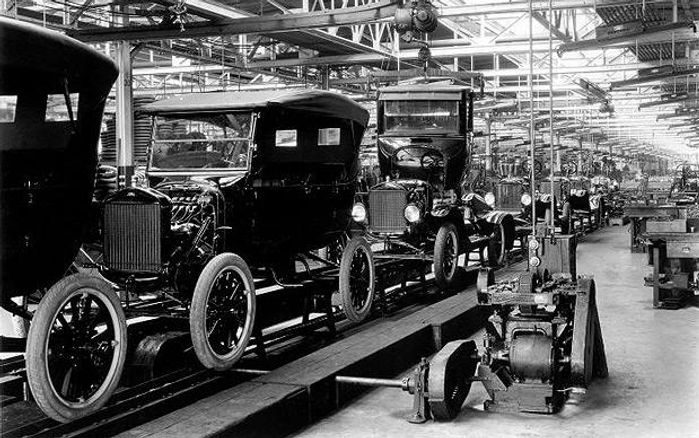
Assembly line at Ford in America
Klaas Baving from Zwolle claims to have been the earliest importer of the Ford automobiles from the USA in 1907. But after selling 4 or 5 cars, he already gave up. At that time, Boissevain from Amersfoort and Veth from Arnhem advertised the sale of Ford, but they also did not sell many.
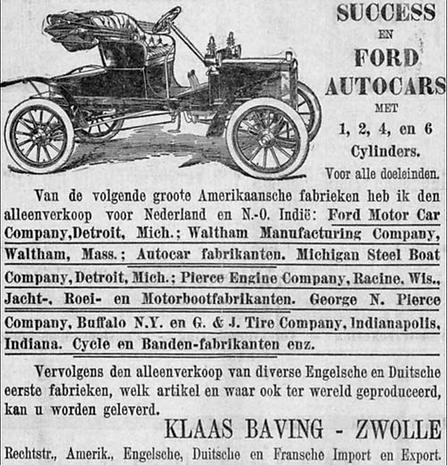
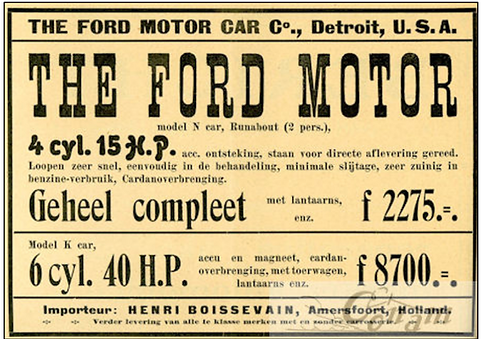
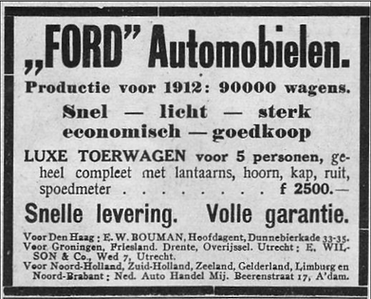
It was different with Bouman and Wilson, who founded the 'Nederlandse Auto Handel Mij' in Amsterdam in 1912. Wilson officially agreed with the European headquarters of Ford, based in Paris, that he would for some time be given the exclusive right to import Ford cars and parts, thereby sidelining Bouman. Wilson purchased the cars from both the United States and England. The other two partners, the Zaandam timber trader Toon Kamphuys and his business partner Arends, who had more knowledge and experience in Dutch business, would arrange the sale. However, the capacity of the garage at Korte Leidesestraat 101-103 and the office located at Be(e)renstraat in Amsterdam were found to be unsuitable for the joint expansion plans. In 1913, under the name 'Ford Automobile Company', they rent the bottom floor of the building at 514 Prinsengracht as a garage from Sieberg (trader and investor in real estate). This sparked Sieberg's interest in the car trade and soon became a co-owner. This naming was only short-lived because once it got through to the Ford Motor Company (Detroit), it was felt that it created too much confusion and could even lead to financial damage. As a result, in 1914 the name was changed to Handelsvereeniging "Ford". With the outbreak of the First World War in 1914, the supply from America and England soon stagnated. Due to a lack of reserves, the Handelsvereeniging "Ford" had to be liquidated at the end of 1916. The buyer (also creditor) of the bankrupt estate was HCL Sieberg. Even before the peace negotiations of the First World War were completed, Sieberg had already signed a three-year contract with the Ford factory in Detroit, whereby he was given the exclusive right to sell Ford and supplies in the Netherlands. Unfortunately for Sieberg, the lucrative import-only contract was not renewed after 1921 and he had to tolerate national competition from many former agents and garage owners, who wanted to take a piece of the Ford success. The Belgian Englebert & Zn, which was established in The Hague, also started importing Fords since the supply of French brands was not possible as a result of the war.
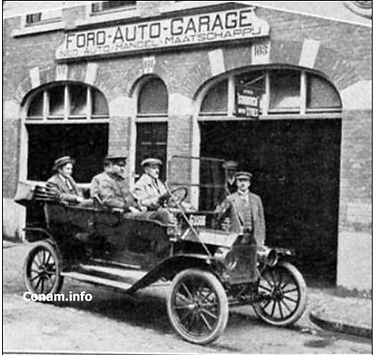
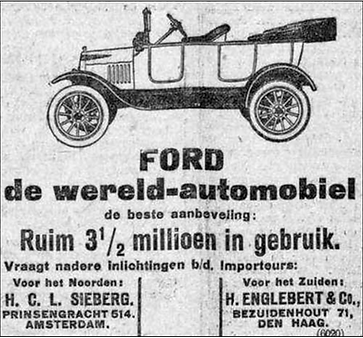
1.3. Authorized Service Station
Theo started ordering his Fords from both Englebert & Zn and Sieberg. In 1919 Theo sold his first Model T Fords. Theo was therefore not the first Ford dealer in the Netherlands, but he was the first to persevere.
In 1921, Ford began to focus more intensively on Europe. From Kingstone House in London, where Ford had a sales office, a salesman, Mr. Steincke, was sent to the Netherlands to check Englebert's books to see who he was selling his Fords to. Here he came across the name Knegtel and decided to pay him a visit. Steincke told Theo that Ford was planning to appoint agents in Europe to get their Fords directly from America.
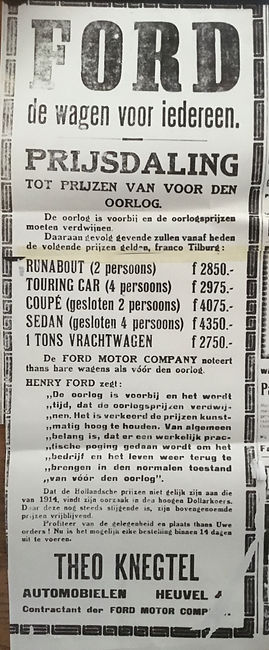
In 1921, Ford began to focus more intensively on Europe. From Kingstone House in London, where Ford had a sales office, a salesman, Mr. Steincke, was sent to the Netherlands to check Englebert's records to see who he was selling his Fords to. There, he came across the name Knegtel and decided to pay him a visit. Steincke told Theo that Ford planned to appoint agents in Europe who could obtain their Fords directly from America.
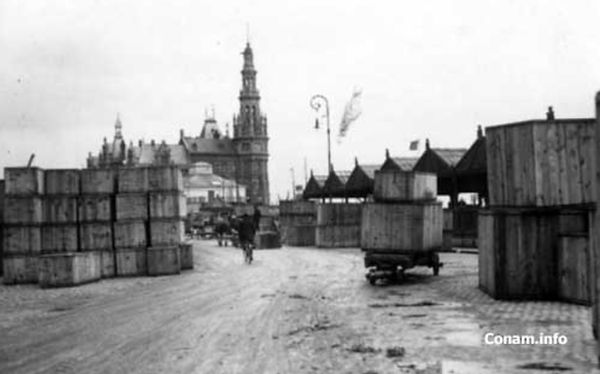
The T-Fords were delivered directly from America via the Holland America Line to Antwerp. Later this became Rotterdam. The cars were delivered CKD. Complete Knocked Down. This was mainly done to avoid high import duties on vehicles. With CKD cars, all manufactured parts were crated, shipped and then assembled in the destination country in a local assembly plant. Incidentally, that box was partly used again in the construction of the car. (By the way, these Ford boxes were very popular: you could find them all over the region: as chicken coop, storage hutch, etc.)
Before Theo was appointed as an Authorized Service Station, he first had to prove that he could build a roadworthy car from these box-packed Ford parts!
On November 6, 1921, Theo was able to announce that he had been appointed by the Ford Motor Company in Detroit as the only Authorized Service Station for Tilburg and the surrounding area. The district included Tilburg and Waalwijk and temporarily also Den Bosch and Breda.

Theo was obliged to sell at least six passenger cars and two trucks every year. The sales of Ford Model Ts went so fast that by the end of 1922 he had already sold the hundredth car. It ran like a train. It was a relatively cheap, simple car. A kind of meccano box, which was available in all kinds of shapes. Payments were made by American Express.
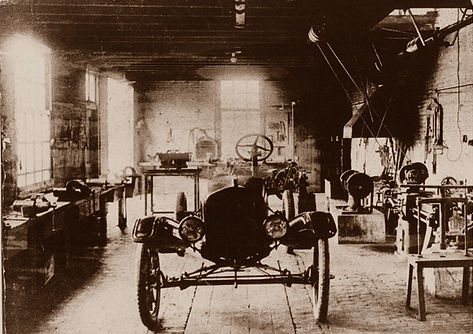

1920: Heuvel workfloor fltr Jan Reijen, grease pit Jac Teeninga, Jan Grielen, Karel-Otto Calle
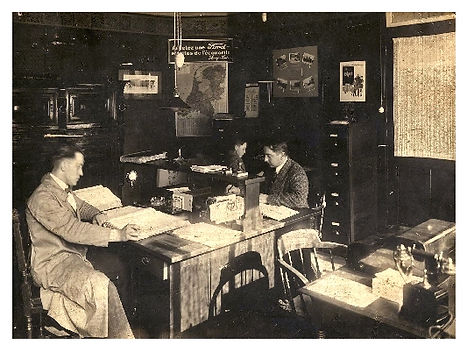
Office: Karel Jurgens, Toon Smulders and Theo Knegtel
In order to better organize import and sales, the Ford Motor Co. established itself in 1922 in the Duboisstraat in Antwerp. There was only a small workshop, without an assembly line like in the United States. A rail track was installed at a height of 1 meter. The chassis was pushed over by hand. A few months after it was founded, a warehouse was rented across the street for the storage of parts. Knegtel was able to buy the Fords in Belgium with a 20% discount and paid by means of bank checks in Belgian francs. That also gave another 20% price advantage. The production was then about 12 cars per day. The cars that were ready were in front of the building. The delivery was reported by telegraph and had to be picked up the same day. There was no storage, so the cars had to be picked up as soon as they were ready. After payment with receipt, they also received a sealed envelope for customs. This had to be delivered in Wuustwezel. Here the engine number was checked by customs. Customs then sent the document back to the Antwerp office, after which the Ford was discharged.
Transport to Tilburg was still quite an undertaking. Especially the drive shaft bearings got stuck frequentlly. It was then necessary to keep the engine running. If it turned off, it got stuck and you had to wait for it to cool down. A good speed then was 20 to 30 km. Trucks ran even slower. Especially difficult because parts were bound in a box on the back of the chassis. The drivers had to wear a leather jacket and ice cap and motorcycle gloves. They might arrive in Tilburg frozen stiff.
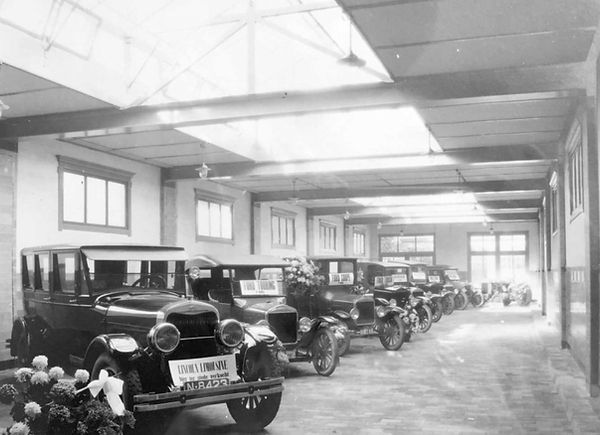
Opening NV Automobielmaatschappij Brabant in Breda
In order to further expand his territory, Theo took a 51% share in the NV Automobiel Mij Brabant, Jan vd Heuvel's company on the Boschstraat in Breda, also started selling Ford products there. Knegtel's district then included: Tilburg, Goirle, Alphen, Riel, Rijen, Dongen, Loon op Zand, Udenhout, Berkel Enschot, Haaren, Oisterwijk, Moergestel, Oirschot, NV Automobielmij. Oost-, Midden- and Westelbeers, Diessen, Hilvarenbeek and Hoge- en Lage Mierde.
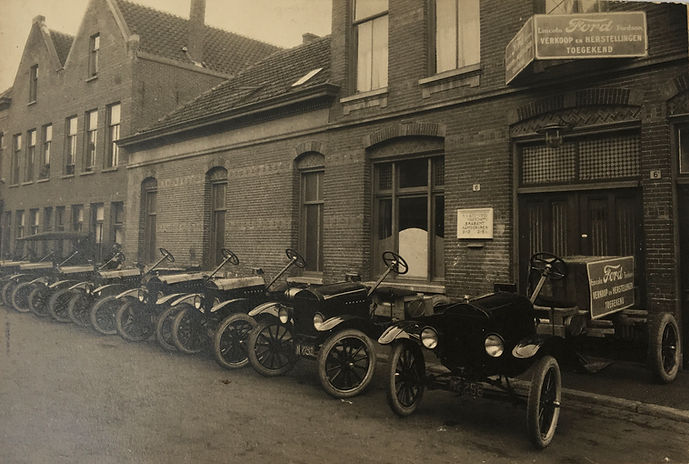
Arrival shipment of trucks from America in 1922 in Breda
In the beginning, Knegtel sold the model T-Ford in the Netherlands, mainly the truck and bus variant. Later on, the car model also takes off. Ford sold better in the Netherlands than in France or Italy because the Netherlands had no or less high tariff walls. Countries with their own car industry, such as France, England and Germany, protected their industry with high import duties. An own car industry has never played a significant role in the Netherlands. So the model T-Ford was quite cheap here.

The shipment from Detroit on the Heuvelplein in front of house number 44 and in the
garage behind the courtyard (see next photo). The adjacent gate to the Heuvel gives access to the courtyard and the workfloor. The building at No. 42 with balcony belonged to wine merchant Verbunt; no. 41 confectioner AJ (Aug.) van Breda + confectioner
MTJ van Loon.

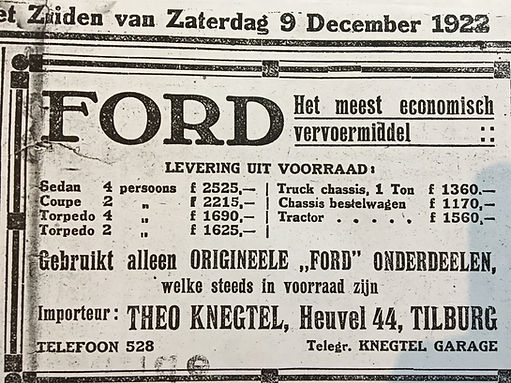
In an advertisement dated 28 August 1922 it is striking that Knegtel mentions the various sales prices without restrictions and that his colleague friend Antoine Broos from Roosendaal mentions the same prices that same month, but with a restriction, namely the addition 'free-on-board' (FOB ) Antwerp. The customers in Roosendaal therefore had to pay the transport costs from Antwerp, while the Tilburg customers of Knegtel did not.

1.4. Ford in the Netherlands
Ford soon thought of building Fords in the Netherlands as well, and in March 1924 the Ford Motor Co. started in Holland at the Van Helmondstraat in Rotterdam in a building of Van Berkels Patent.
In 1932 they leave for Amsterdam.
During the 25th anniversary of Ford Nederland in 1949, the start of Ford in the Netherlands was brought to memory based on a 'witness report' by an employee from the very beginning, the oldest jubilee,
Mr Piet Pijpers (father of Edward ). See also 2.6.
Witness report Piet:
“I was working at a US shipping office when an advertisement caught my eye.
It was an automobile company that was looking for administrative staff, and the compensation that was charged more than exceeded the average values. A client of this office advised me to apply as he knew it was Ford. The son of this advisor worked at Ford Antwerp, and after the Second World War became director of Ford Nederland in Amsterdam. So on February 1, 1924, I joined Ford and was immediately placed in the Sales Department, which actually didn't even exist yet. We were in a room in the Weimar Hotel with four people: one American, one Irishman, a shorthand typist and the undersigned. On March 6, the deed of incorporation was signed and we moved from the hotel to the Van Helmondstraat, where work started with about thirty people. The service plant was housed in three construction sheds with semicircular curved roofs, which were leased from Van Berkels Patent. Next to it was an office, on the ceiling of which a lunchroom (canteen) from Ford crates was later built. The people's job was to bring in cars and make repairs. The cars were then built in Antwerp and shipped to Rotterdam by barge. In such a barge, 60 to 125 cars could be stored: luxury cars at the bottom and the trucks on top. Also tractors came in and tractor parts, with which the assembly started. When Van Berkels Patent needed its buildings again after a few years (1928), it was very difficult for Ford to find suitable accommodation in Rotterdam. Eventually the Municipality had one of the Nenijto exhibition halls moved to the Galvanistraat, in order to get us out of the emergency situation. This hall, too, which was of wood-clad iron construction, was far from perfect, as the shed had a tiled floor on sandy soil. When we drove in with the cars, the tiles came loose and they stood erect in the sand, rebellious.
Nevertheless, the first trucks were assembled in this hall. The line consisted of a track of angle irons, on which the trucks were pushed forward. By the way, everything happened with 'elbow steam' and many Americans who came to visit us had a good laugh when a chassis was picked up by some Rotterdammers and was put unsteadily on the line. The first building specially designed for the Ford company was also conceived in Rotterdam, for which a site of 3 hectares was purchased."
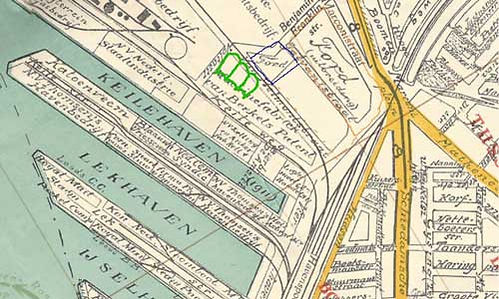
When the first pile for a new Ford factory was driven into the ground in Rotterdam in 1930, Henry Ford judged the site to be too far from deep water and withdrew*.
Although the Rotterdam building was completed, we never moved in, and the entire company was moved to Amsterdam (1932). The relocation of the factory caused quite a stir among the people of Rotterdam, for whom the Maas and its surroundings meant a lot."
* Later it turns out that Henry Ford did not think the building was worthy of Ford and was also annoyed that no dignitaries would be present at the 'first pile' moment. Negotiations with Amsterdam had long since started, so he used the 'water argument' as an excuse to get out of it.
1.5. The Ford Week in Tilburg
In June 1924, Knegtel took part in the Koopmansbeurs that was held annually in Tilburg on the Piusplein. The entrance to Garage Knegtel was also on Piusplein. In 1924 the fair was given the title 'Fordweek'. The following article was published in Het Nieuwsblad about this week:
THE "FORD WEEK." June 9, 1924
As known, posters announced an 'advertising Fordweek' from 9 to 14 June. Yesterday it was opened with a parade composed exclusively of trucks and vans.
Around eleven o'clock people saw the participating cars driving from all sides and from all streets on the Piusplein, which had been chosen as the starting point. In a few moments an uncountable number of cars were present, all of which, decked out with advertising posters and 'Ford flags'. They were set up in fan shape to be photographed. Then the tour started. Preceded by the police, the procession was opened with a truck on which a music band had taken place to cheer up the road to be traveled with exciting music and to give the whole a festive look.
What was envisaged by this parade (a considerable advertising campaign for the Fordwagen) may be called very successful. With an American car, real American advertising was demonstrated here in an American way. And as the mile-long procession passed our desks, we couldn't help thinking that a Ford van or truck has become an indispensable item for those who want to understand their time.
We are not technicians, but the reality that more than 9 million Ford cars have already been completed by the factory gives us the certainty that these cars are not only economical and economical to use, but that they are first and foremost, excellent and solid.
An article which in a few years has acquired such a world reputation must necessarily be good for that reason. We can only congratulate Mr. Theo Knegtel, the official Ford dealer for Tilburg here in town, on his wonderfully successful propaganda procession and look forward to the further development of this very topical advertising campaign with interest.'
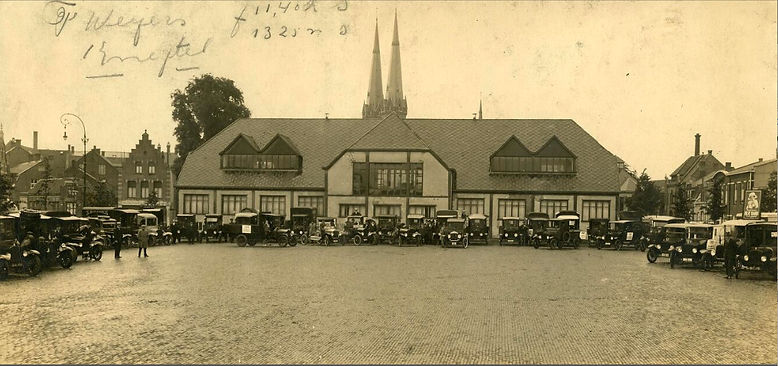

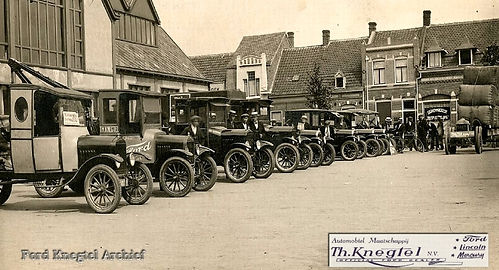
The names of some of the customers who took part are recognizable, such as A. Heerkens Steenkolenhandel in the Zuidoosterstraat, JJ de Leeuw fishmonger in the Tuinstraat, baker MC Santegoets in the Trouwlaan and M&H de Bont wholesaler in groceries on the Heuvelstraat. Top left the Koopmansbeurs which stood on the Piusplein from 1919 to 1927. The entrance to Garage Knegtel was also located on this square.
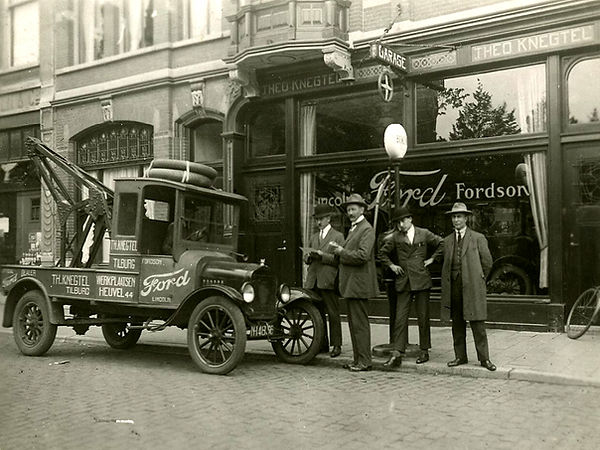
The tow truck (something startling at the time) from Garage Knegtel in front of the showroom on the Heuvel. In this photo, taken in 1925, we see government officials De Ruyter (2nd from left) and Van de Boom (far left). They were charged with the control of the road tax. Probably the 2nd from the right is Theo who looks a bit taken aback. Even then, he didn't like paying taxes.
1.6. Expansion of the Heuvel
In 1926 the business complex was expanded with a showroom and workfloors on the Prinses Julianastraat (now Heuvelring) and on the Piusplein.
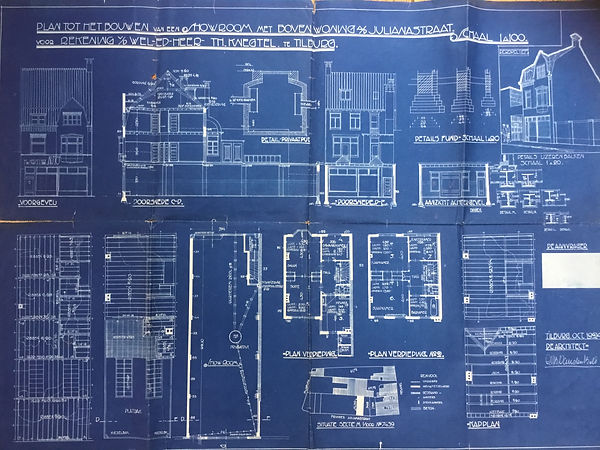
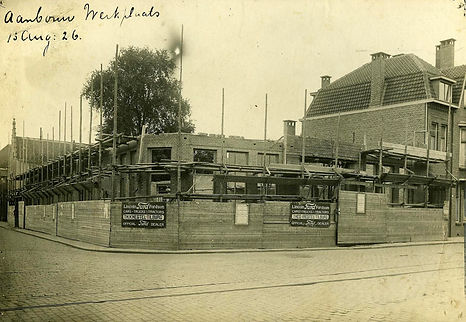
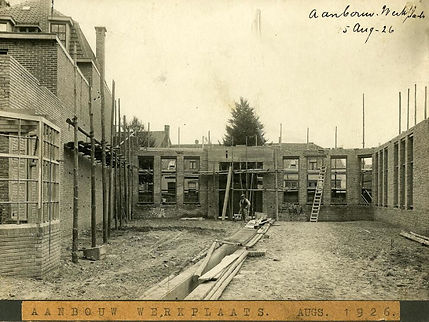
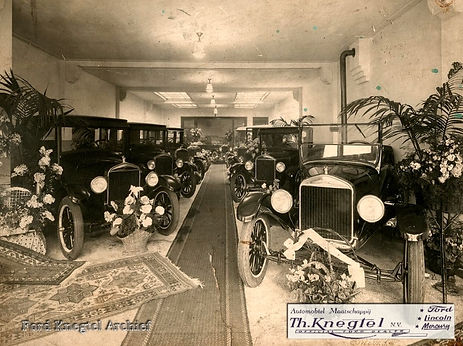
Showroom on the side of the Prinses Julianastraat (now Heuvelring)
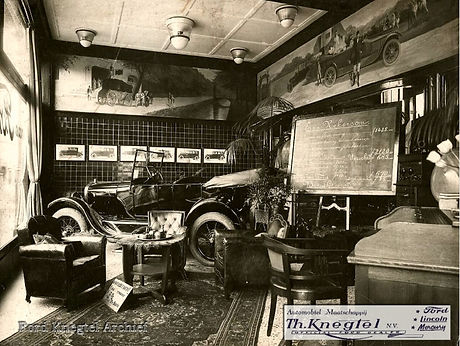
Showroom at Heuvel 44 with a calculation on the blackboard to make it clear that it paid off to buy your Ford from Knegtel.

Since 1928, the PTT has parked all its cars in Garage Knegtel. Here in front of the entrance at the Piusplein.

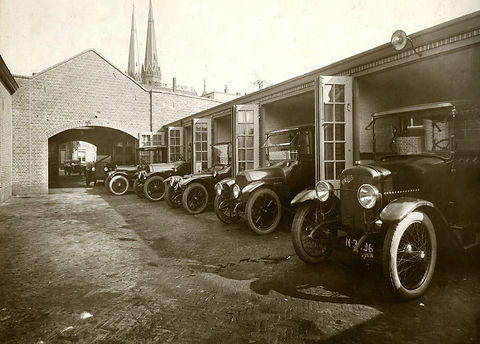
In addition to regular parking, the Knegtel garage also had private parking spaces.
Meanwhile, Ford was working on a first: the A-Ford. This meant the introduction of a normal gearbox as we know it today. The startling replacement of the “crank” with the electric starter also dates from this period. The romantic carbide lanterns had already been replaced by electric ones in 1918. In this, the so-called planetary gear system was also steadily perfected by Ford.
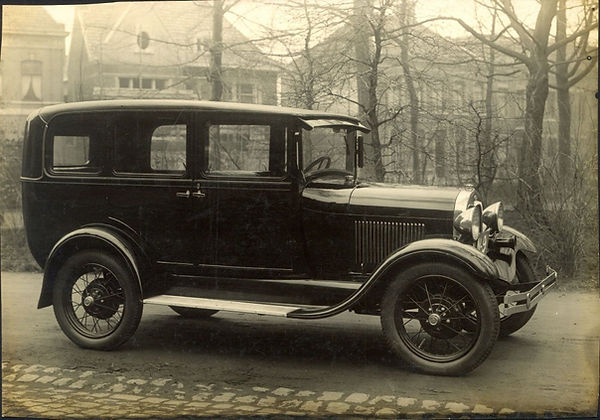
The A-Ford with the registration number N-9 that was often used temporarily by customers.
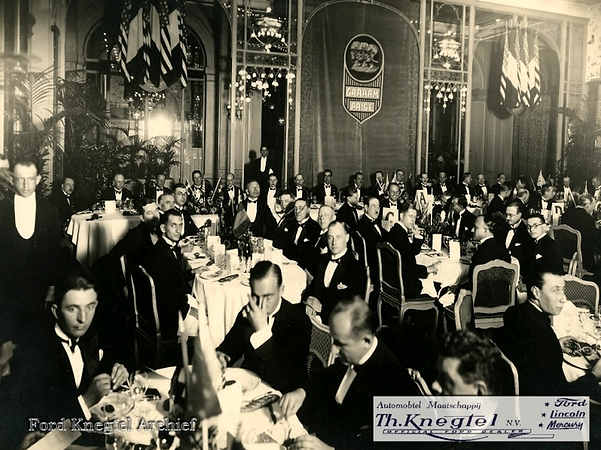
Because no Fords could be delivered due to the transition from the Model T-Ford to the Model A in 1927, Theo then sold the Graham-Paige and Hudson brands. This was turned a blind eye by Ford. In 1928 a dealer meeting was held by Graham-Paige. Graham-Paige was an American automobile brand founded in 1927 by brothers Joseph and Robert Graham, along with Canadian Ray Austin. The Graham brothers started making conversion kits in 1919 to convert Model T's into small trucks. Soon after, they started making trucks themselves with engines from different manufacturers. In 1927 they bought the Paige-Detroit Motor Company with the proceeds from the trucking company. In a short time they brought several Graham-Paige models on the market with six and eight cylinder engines .
Graham Page's dealer meeting with Theo Knegtel at the middle table on the left
During the visit of Henry Ford to the Netherlands in 1930, Theo Knegtel was allowed to accompany him as the oldest Ford dealer in the Netherlands in contract years. From left to right Jan van den Heuvel, Ford dealer Breda, Theo Knegtel, Anton Philips, Director of NV Philips, Eindhoven and Henry Ford.


Theo often took his family out for rides when things were still going on with his in-laws. Here with his brother-in-law Johan van den Heuvel and their two wives, Henriette Knegtel-van den Heuvel and Isabella van den Heuvel-Gerritse. The young man is Fons Knegtel.
Theo preferred to bring his own family: Mother Henriëtte on the left, above Fons, underneath Gondje and Jan and Adje

1931 - 1954: Renovation
.png)
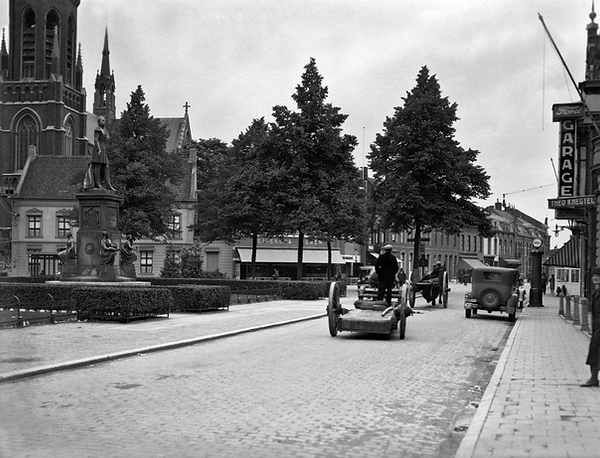
1931: Garage Knegtel on the right with Shell pump and on the left the statue of Willem II. There were some who objected to the King pointing with his right hand at the showroom of Garage Knegtel as if in a gesture of: Go see that!... It was therefore considered to give the statue a turn but that encountered even more objections…
2.1. The next big renovation
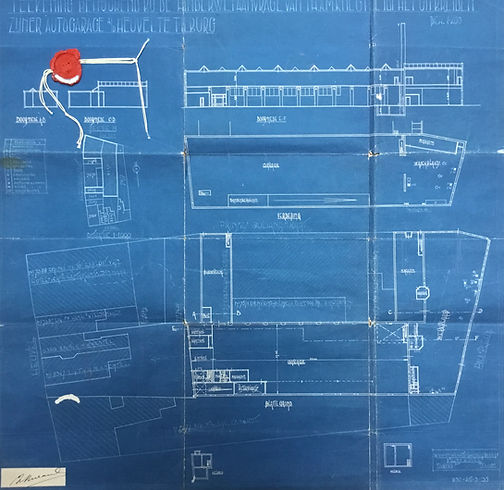
Due to the increasing expansion of the company and bearing in mind Ford's catchphrase 'Service', Theo felt that in the present building this could no longer be the case and that a major change and improvement had to be made to make better use of the surfaces of the building on the Heuvel. Architect FJ Hovers was hired and the whole complex, with the exception of the office, showroom and workshop, was thrown to the ground to gradually a new building in the same place was build, using every centimeter.
The original blueprint of the remodeling design with the
seal of the municipality and the signature of Theo at the bottom left.
“Through the entrance gate on the Heuvel, you walk on a monumental facade in modern style with a front width of 18 meters. The first striking feature is the spacious and fresh-looking facade in austere, yet "melodic" lines, with the large entrance to the new garage in the middle, adjacent to the old workshop at the back. The office space is still known on the left, although also very embellished and modernized, while on the right the day-and-night porter has his box.To the far right of this porter's lodge, lying in the corner and directly relative to the entrance to the street, a reduced edition of the Antwerp Schelde tunnel has been constructed in the form of a slowly sloping driveway to the first floor, where garage no. 2 is located above the entire surface of the ground-floor workfloor. Before entering the garage below, one enters between the office and the porter's lodge under a porch - indirectly lit at night - and the motorist does not get wet if sometimes late in the evening or on a rainy night he has to open the great double sliding doors himself. This door, a fine piece of work, so beautiful that it would look great in a winter garden in a large hotel, is the architect's own creation and construction and it is very gallant of him to remember that many ladies also drive cars and that is why he made sliding open this great, half-glass doors, so easy and so light that one can perform this "opening ceremony" with one finger. Behind this entrance, which houses toilets and an oil shop, one stands in front of a 60-metre deep space, adjacent to the workfloor near the Piusplein. Here, with a large central space, there is room for dozens of cars along the sides, while every lost corner is used again to store material. In the far right corner of the lower garage is an iron plate, under which is a large tank with funnel-shaped opening, above which the used and dirty oil from the cars is drained to a quantity of 5000 liters. The floor of this garage is made of "Silbit-carburundum", which in practice means that it is a completely non-slip substance. In the basement there are three boilers with a capacity for central steam heating of 400,000 calories and 200 meters of heated surface. The ramp to the upper garage is over 40 meters long and leads to an equally impressive space, to which — above the existing workfloor and therefore also overlooking Piusplein — a laundry and a hypermodern lubrication facility is connected to a warehouse for the larger parts.There are also four telescopic car lifters operating with air pressure.To prevent that a motorist, who has to park his car at the front, does not have to walk around the entire building again to go back down via the 'tunnel', there is a staircase at the front that leads to the entrance behind the porter's lodge at the bottom. The floor of the upper garage has many compartments of thick glass tiles, which allow daylight to pass downwards from the shed roof. Understandably, the latest gadgets have been applied in everything, such as protected contacts, watertight light points and so-called antinyt cables instead of rusting pipes. On the Julianastraat side — between the intact showroom and workshop, the large parts warehouse has been expanded considerably and here you can get everything that belongs to a Ford.”

Entrance from the courtyard on the Heuvel side.
On Saturday afternoon, January 5, 1935, the official opening took place in the presence of 150 guests. Among those present were the director of the Dutch Ford factory in Amsterdam,
Mr GJJ Both; the Sales Manager F. Knappe, various Ford dealers from the area, including Theo's brother-in-law, Jan van den Heuvel from Breda; Mr Van Strien, dealer in Culemborg, A. Centen, dealer in Zutphen, Jac van der Meulen from Eindhoven, Mr FG Steneer, director of the Amsterdam Automotive Industry and various dignitaries and garage owners from Tilburg and the surrounding area. After Theo had welcomed everyone present, especially the director of the Dutch Ford factories, the floor was given to Mr H. Blomjous, member of the Senate and from Tilburg.
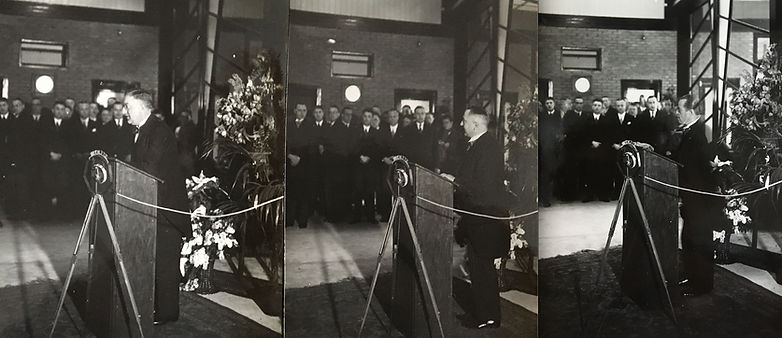
fltr: Dhr Both, Theo Knegtel, Dhr Blomjous.
He made the opening by cutting a ribbon in front of the large entrance doors. As a permanent reminder of this day, Theo received a special kind of clock from Mr Both, which, once started, never needs to be wound-up again. At the invitation of Mr. Both, Mrs. Knegtel started the remarkable clock, as a symbol of the ushering in a new era for Garage Knegtel.
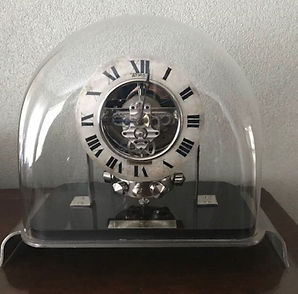
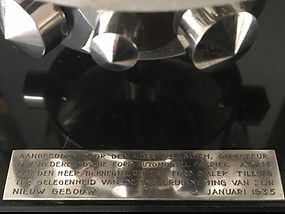
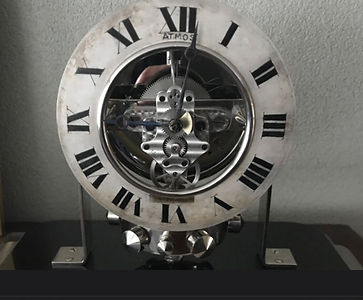
The clock that was offered at the opening of the renovation is an Atmos clock that runs on air pressure differences. Els Knegtel had the clock restored and got it working again.

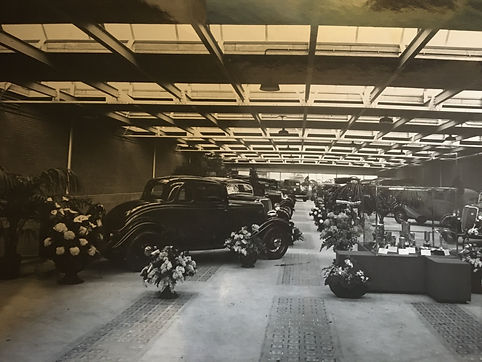
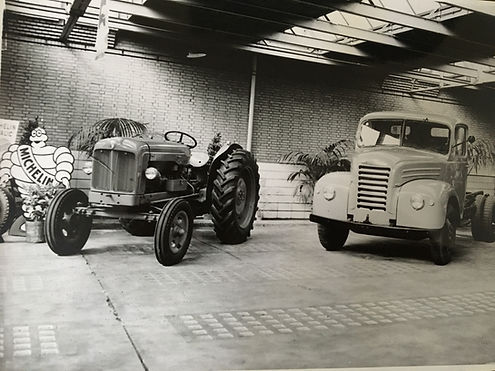
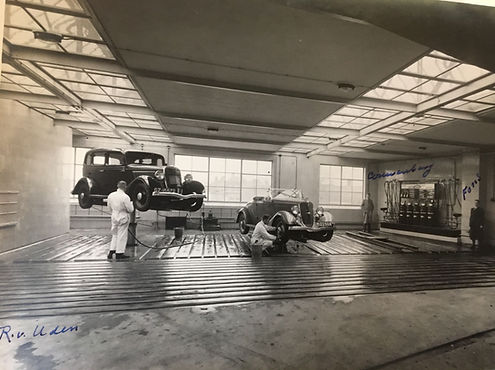
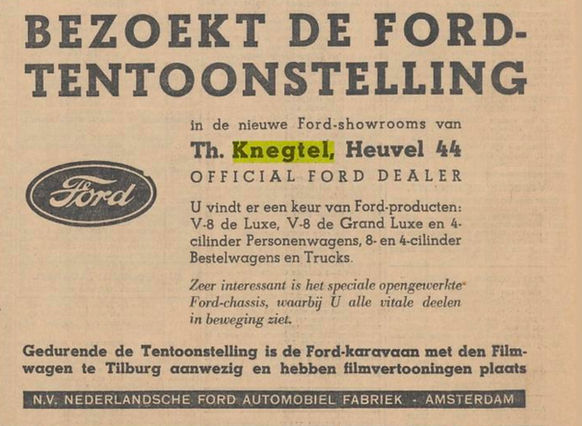
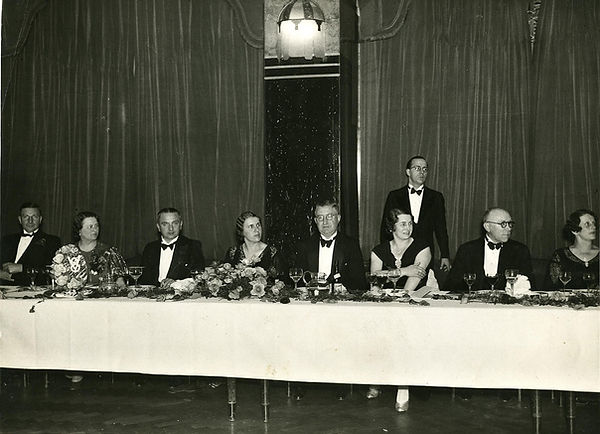
In 1934, Theo (third from left) attended a Ford Nederland dinner in Amsterdam, where a commemorative window was presented by the Dutch Ford dealers on the occasion of the assembly of the 500th Ford in the Netherlands.
In 1935 Theo arranged for 6 Lincolns, which he had sold, to exhibit together in front of the St Jozef Church on the Heuvel. The Lincolns were there on the occasion of a double marriage within the De Rooij, Möller and Blomjous family.

1938 was a good year for Knegtel and Ford thanks to the introduction of the Zephyr, "Ford's best product". The Ford Dealers also met regularly. Here they are together in 1939 in Café Royal in Arnhem. 3rd from the right Fons and 6th from the right Theo.
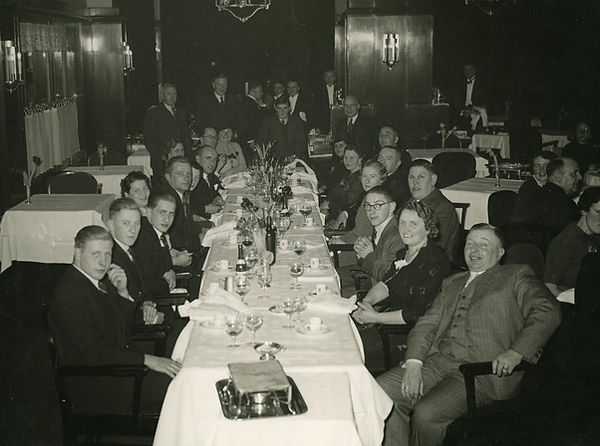
2.2. The war years
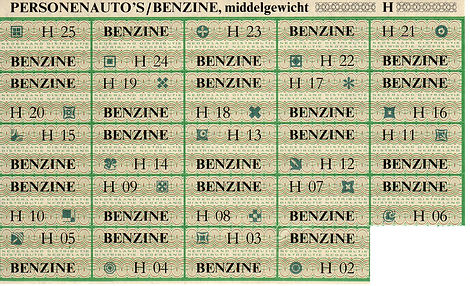
Due to the approaching unrest regarding a possible war with Germany, the conscripted men from the Netherlands and therefore also from Tilburg were mobilized. On August 23, 1939, Frans Geerts, Janus van Gool and Fons had to report. On May 5, 1940, Germany invaded the Netherlands and after the capitulation of the Netherlands, the Dutch troops were demobilized. Frans Geerts returns to the administration and Van Gool to sales. Half of the workfloor was confiscated by the Germans as part of the labor claim. That part was separated with chains and designated as Heeres Kraftwagen Park (HKP), a workshop for the German Wehrmacht. After that everything was only available by means of a voucher: petrol, oil, gas, wood.
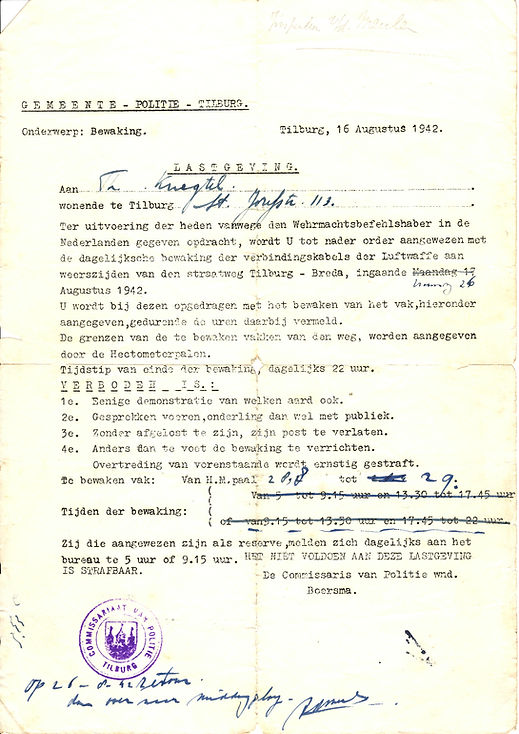
Knegtel was ordered by the occupying forces to guard the Tilburg-Breda route. This was often 'taken care of' by Van Gool, Dekkers and Fons.
There were regular sabotage attempts. Fons was warned several times not to go to the office because there was a Feldwebel waving a gun because once again a brake line was not properly tightened. Theo also had contact with Shell to supposedly reserve supplies for the 'Food Commissioner'. Carrying out 'necessary' sabotage in the garage confiscated by the Germans during the occupation years resulted in some tense moments for Knegtel.
In the beginning it was also difficult to get the German Scheinen (German currency) exchanged for Dutch money. Fons then went with Frans Geerts to Gilze Rijen for payment. That was accomplished with great difficulty.
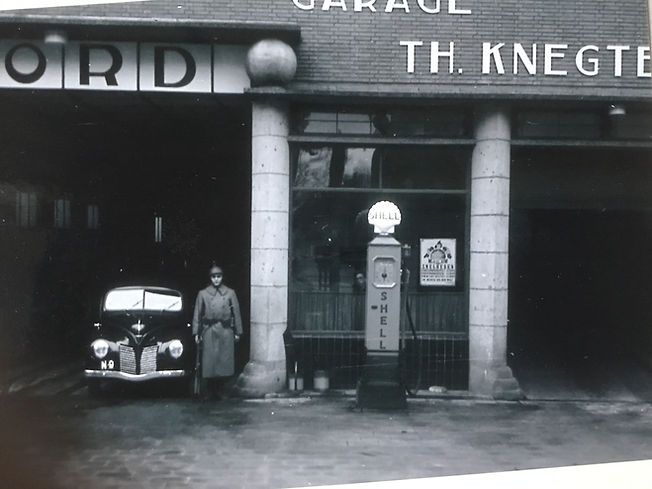

According to Theo (in a letter to former employee Gerard Potma) they eventually got away with it: “We have lost three cars, have damaged glass for fl. 200 and 40,000 liters of petrol have been disabled. The first weeks we had a full staff, but after that we were forced to lay off employees. First the unmarried employees, but then we also had to let some married people and breadwinners leave. In total about 18 people”.
Since it was too restless in Amsterdam, Ford Nederland held office above the shop on the Heuvel for a while during the war.
In 1941 the news came that non-commissioned officers had to report to Amersfoort to be deported to Germany as prisoners of war. Theo obtained an Ausweiss for Janus van Gool and Frans Geerts: Frans Geerts was ill and indispensable and, after all, already worked for the HKP. Eventually this was accepted.
When the end of the war came in sight and the case still had many outstanding bills from the HKP, Geerts went by bicycle to the HKP headquarters in Breda to get money. This worked. Those trips by bicycle were not without danger. It sometimes happened that he had to hide in a ditch during a bombardment by the English.
At the end of 1944, developments in the war started to move in the right direction, but not without danger. On October 27, Frans Geerts, Janus van Gool and Jo Dekkers had to take shelter in the heating cellar of the business from shelling by the English on the retreating Germans. They have experienced anxious moments. Afterwards mainly a lot of shard damage, but in the afternoon they were freed.

Partly due to a lack of liquid fuel due to the war, Theo applied for a license from the municipality to establish a more extensive gas station in Tilburg on the Piusplein. Building this Texaco gas station - manually operated with two 5-litre gauge glasses - would cost about fl 85,000, for which the municipality would lend him fl 25,000 to 5%. The required gas would be supplied by the Municipal Gas Company for 4 ½ cents per m3. Naturally, the municipality received fierce protests from fellow garage owners against this decision.

2.3. Expansion after the liberation
After the liberation of Tilburg in October 1944, Fons crossed the ocean to Washington to be with Els Steenberghe and to marry her there. Through his father-in-law Steenberghe, he got a job as a member of the Road Transport Purchasing Committee of the 'Rijksbureau Materialen Wegverkeer'. Since the western and northern Netherlands had not yet been liberated and Rotterdam and Amsterdam were not accessible, he arranged for the 'Rijksbureau' to appoint Garage Knegtel as importer of buses, trucks and tractors for 'the time being'. Customer relations from Tilburg used their connection to order cars through Fons (see eg the letter below from Mommersteeg), including many Lincoln Continentals. Knegtel was the top seller of this model at the time. In addition, 165 tractors, 65 Wayne city buses (20 for Tilburg), 100 Canadian Ford trucks and 64 REO trucks (which Knegtel assembled itself) found their way to Dutch users via Knegtel.

After his return in 1946, Fons received a visit from a major of the US Forces in Germany in charge of insurance matters (Don B. Reynolds). He was looking for suppliers of American cars that could be delivered to GI's tax-free. Against an agreed commission, he sent trains full of Americans to Tilburg to buy Fords and drive them back to Germany. These Fords were fitted with Dutch Knegtel clogs to ensure continuity in the relationship. More than 300 Fords were sold this way.


After the war, the stock had to be replenished quickly. Ten new Ford model 598T trucks have arrived.
%20vrachtwagens%20Ford%20model%20598T%20geparkeerd%20i.jpg)
Welcome back from the war
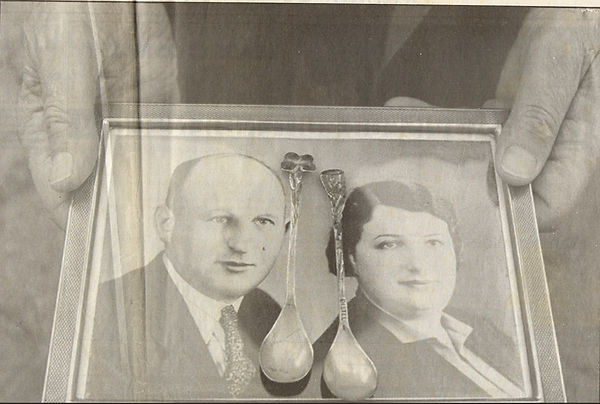
Sal Zanten's life was largely dominated by the Second World War. Both his parents and his only brother were murdered in 1943 and 1945 respectively. Sal Zanten himself stayed in Kamp Vught and Auschwitz, among other places. In 1945 he returned to the Netherlands with other camp prisoners. Arriving in his hometown of Amsterdam, he walked to his own house, which turned out to be inhabited by someone else. It took years of litigation to get the property back. The items that his parents had left for safekeeping in Amsterdam turned out to have been confiscated by officials in 1968. He also received 10 tax assessments from the tax authorities over recent years.
Before the war, Sal's father had a successful car parts company, Technische Handelsbureau E. Zanten. In 1947 Sal Zanten settled in Veghel and continued his father's company, founded in 1926. In effect, he had to rebuild the business from the ground up. When he visited the company relations, no one was willing to pay the outstanding debts. “Except for the old Mr. Knegtel from Tilburg. When I went to visit him shortly after the liberation, he said: 'I have another surprise for you'. He gave me 56 guilders. I felt so rich then," said San Zanten in the Brabants Dagblad of 13 December 1997.
2.4. 25th anniversary

From left to right Jan and Theo Knegtel, CGF Stenger, Director of NV Nederlandse Ford Automobiel Fabriek and Fons Knegtel
On November 15, 1946, Garage Knegtel commemorated the fact that they became an Official Ford dealer 25 years ago. The first Ford dealer in the Netherlands to achieve this anniversary. This was done by organizing an exhibition of the latest Fords, the Mercury and Lincoln. The then director of the Ford factories in the Netherlands, Mr Stenger gave a warm welcome in which he praised Mr Knegtel for his trade and great perseverance and added 'that through hard work Mr Knegtel has built a company that sounds like a clock. The jubilee has contributed greatly to the flourishing of such a beautiful and industrious city as Tilburg. On behalf of the entire staff, both in America, England and the Netherlands, I can say that we are extremely happy to have found the man in you who was going to look after our interests in Tilburg'. Theo also received personal congratulations and a word of thanks from Henry Ford.
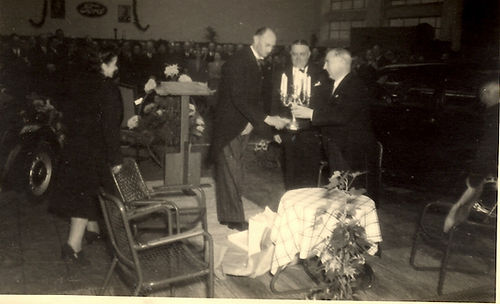

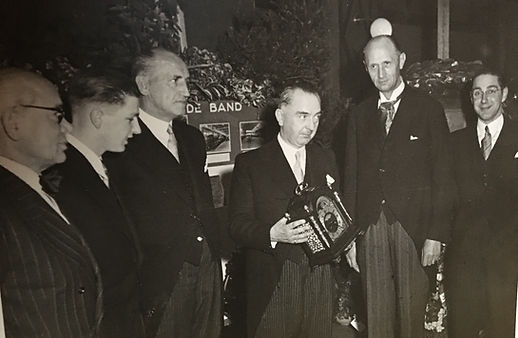
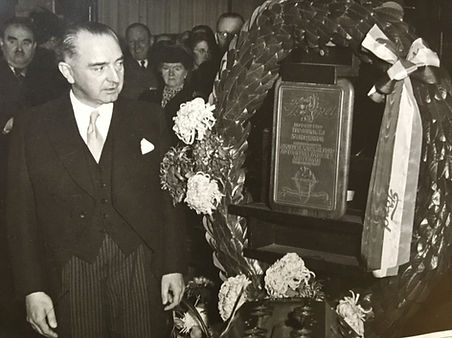
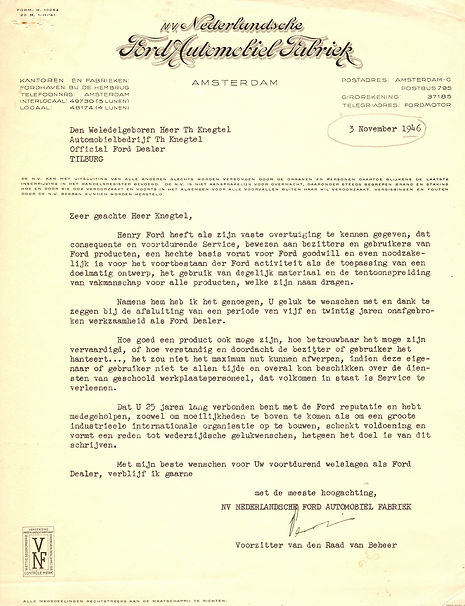

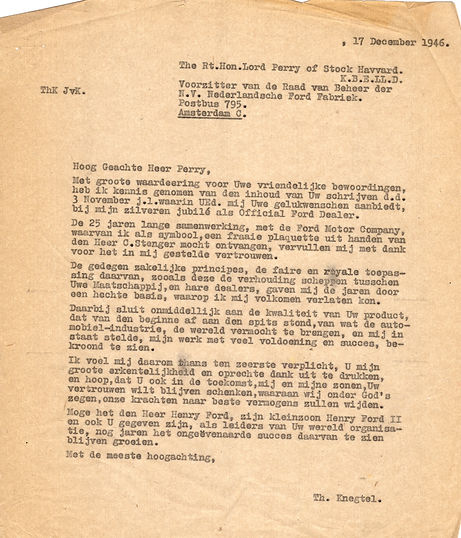

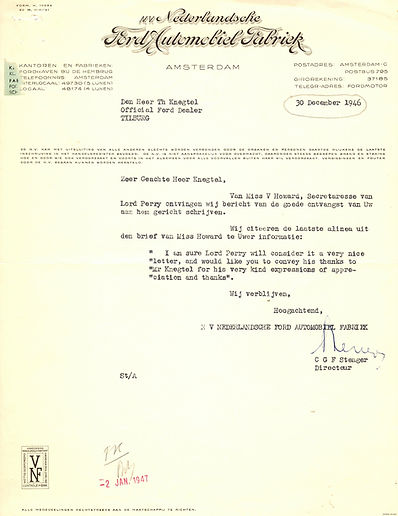
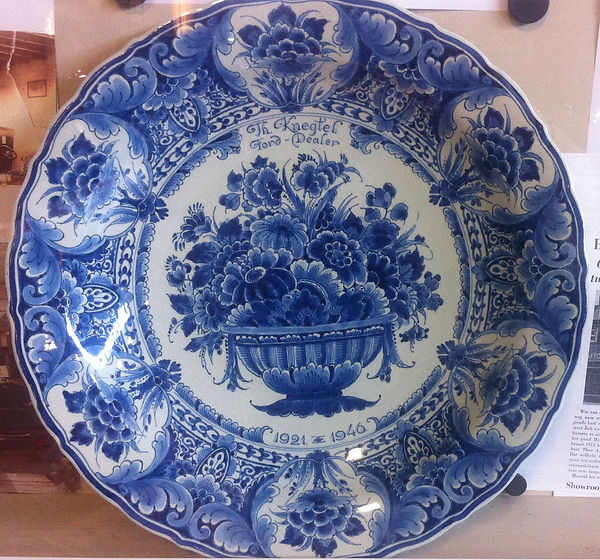
On behalf of the Western Ford dealers club, Mr. Boissevain from Amsterdam presented a beautiful Delft blue vase. On behalf of the Southern Ford Dealer Club, Mr L vd Homberg from Venlo offered Theo a beautiful English clock and a plate of Delft blue.
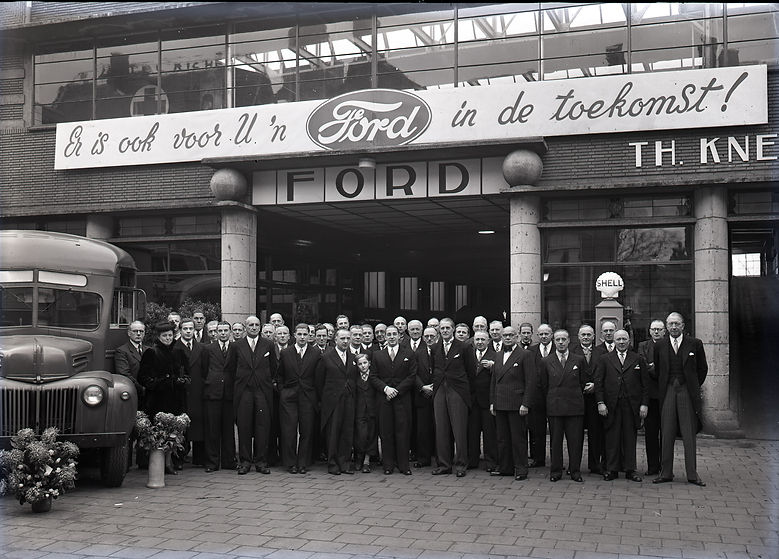
Left to right in the middle Jan, Theo, Harry and Fons. 3rd from the right Piet Pijpers. To the left of Jan Director Ford Netherlands CGF Stenger.
_ORG_j.jpg)
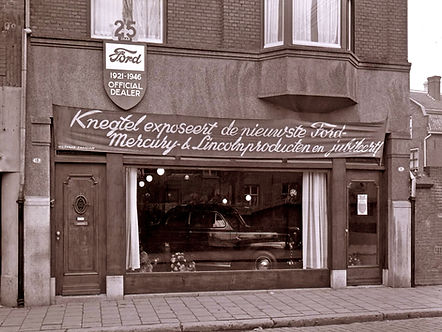
Everything was festively decorated and the latest Ford-Mercury-Lincoln in particular attracted a lot of attention.
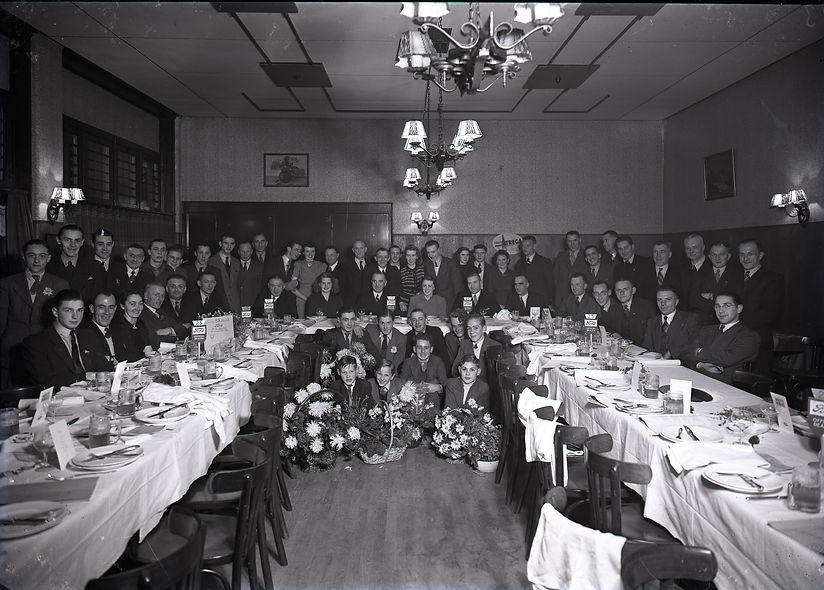
The 25th anniversary was festively celebrated in the evening with staff and family in Restaurant
'Daf Rutten' in Goirle. Far left at the table Jan and far right Fons. At the main table from left to right Els Knegtel-Steenberghe, Theo Knegtel, Gondje Knegtel.
2.5. Temporarily fewer passenger cars
After the Second World War, production of the Fords made in France ceased. President de Gaulle came to power and he mainly opposed the USA. The Americans may well have played a part in the liberation of the country, but in France it was felt that the Americans emphasized this too much, and underestimated the role of the Maquis and the Résistance in this, to the point of rudeness. Ford was forced to cooperate with the Dirigisme plan:
This meant that the State would check, regulate and oblige everything from A to Z. In the field of the car industry, this resulted in the so-called Plan Pons, named after the French engineer Paul Marie Pons, who was appointed as a consultant by the French government. Pons had drawn up a plan in which most car manufacturers were given a very specific role, according to certain priorities. Each of these manufacturers was only allowed to make certain types of vehicles. Ford also fell under the plan, and was obliged, among other things, to only produce a certain number of trucks.
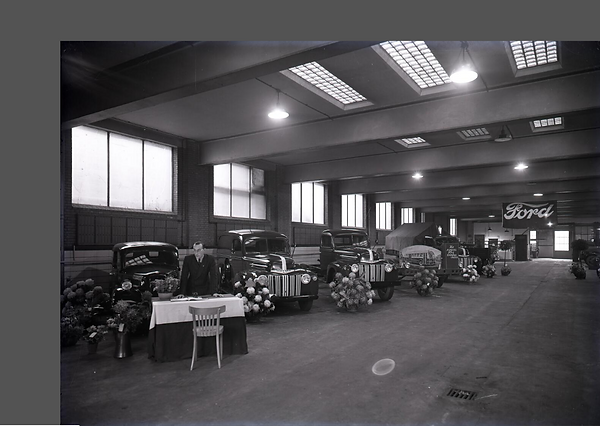
Ford Pick-ups at the Breda location (photo Schmidlin)
At the opening on March 31, 1947 of the new city service by the BBA (Brabantse Buurtspoorwegen and Autobusdienst) a parade of the 12 delivered by Knegtel buses on the Hill.
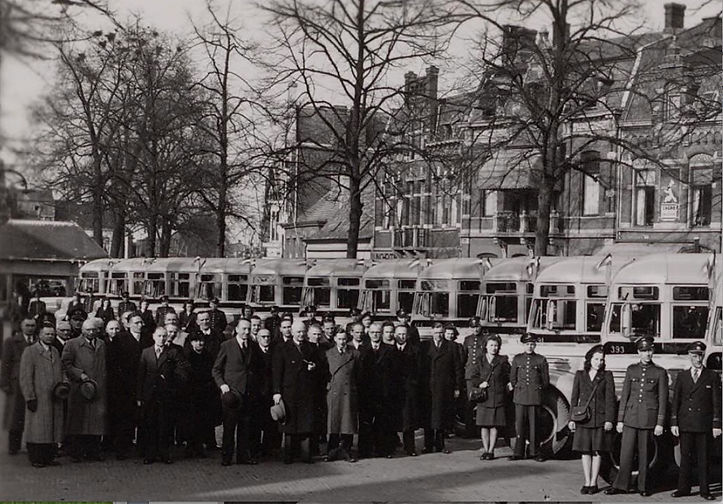
This happy fact was celebrated afterwards in 'De Bremhorst'. fltr: J. de Jong dir. Public Works, Th. Knegtel, R. Emich van het Nieuwsblad van het Zuiden, NTC Ganzeboom and G. vd Brekel of East Brabant.

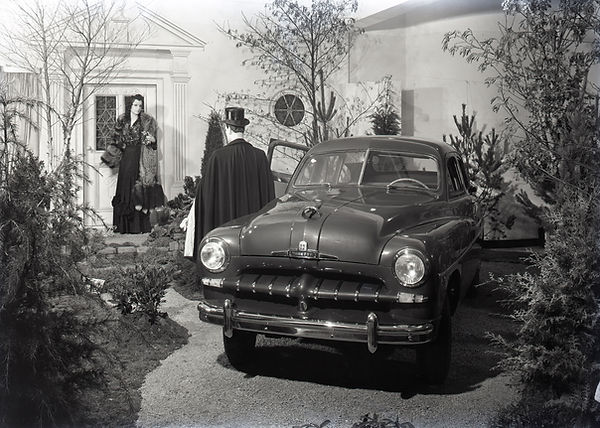
When the controversial Pons plan was apparently withdrawn or relaxed later in 1947, passenger cars were again produced. The management had decided to produce a new model of car, which had to form a bit of a bridge between America (design) and Europe (driving characteristics). This became the Ford Vedette.
The new Ford Vedette in the showroom of garage Knegtel
2.6. Next generation takes over
In 1947, Fons officially joined the company. Jan leaves for Detroit for a year to work on the production line at Ford.

In March 1948 Henry Ford II visits the dealer meeting in the Apollo Pavilion in Amsterdam. On that occasion, Theo addresses those present on behalf of the Ford dealers.
left Henry Ford II, right CGF Stenger, Director of NV Nederlandse Ford Automobiel Fabriek. On the far right is Piet Pijpers.
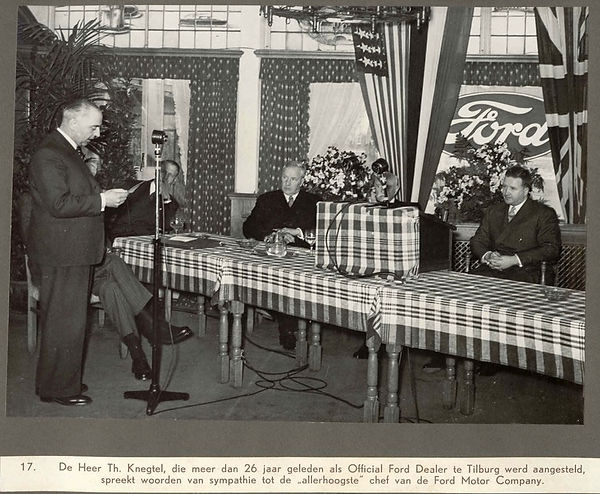


Since Theo was the oldest appointed (in contract years) Ford dealer, he was the only
Ford dealer who was allowed to attend the dinner.

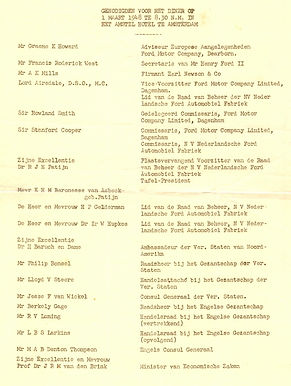
In 1948 Jan returns from Detroit and joins the business.
On September 9, 1949, the 25th anniversary of Ford Netherlands is celebrated in the Ford Factory in Amsterdam. On the occasion of the anniversary, the dealers monument was unveiled on the Ford site and all models were presented.
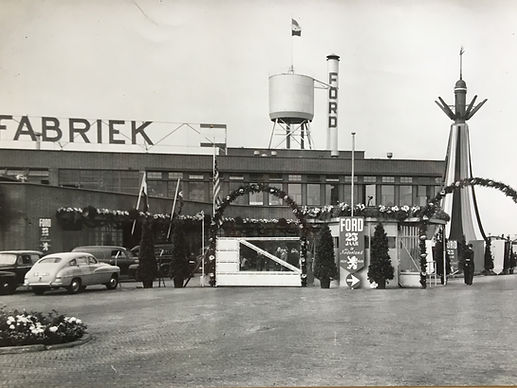
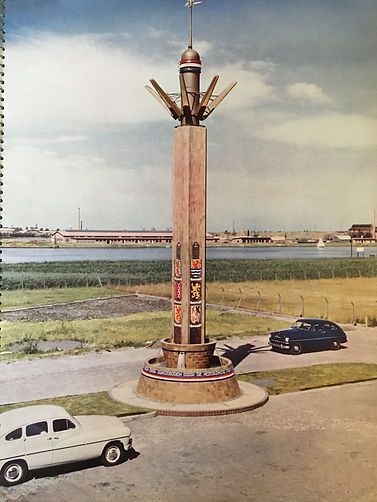

The 'oldest' jubilee that day is Piet Pijpers (see also 1.6). The anniversary will be concluded in the evening with a dinner in Huis ter Duin in Noordwijk.

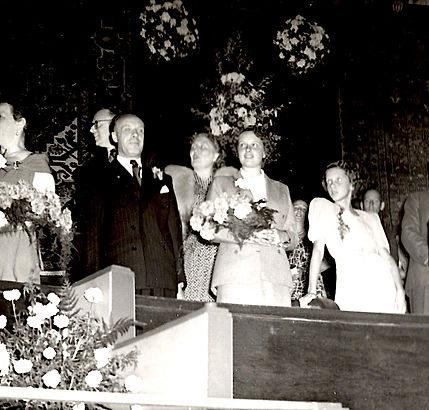
As the 'oldest' jubilee of Heer Geldermann, Piet gets the '25 years Ford' badge pinned on .
This anniversary coincided with the first race of the Dutch Auto Race Club on the new Zandvoort circuit. Jan participated with the Ford Custom V8 (number 41). It is unknown on which place he finished.

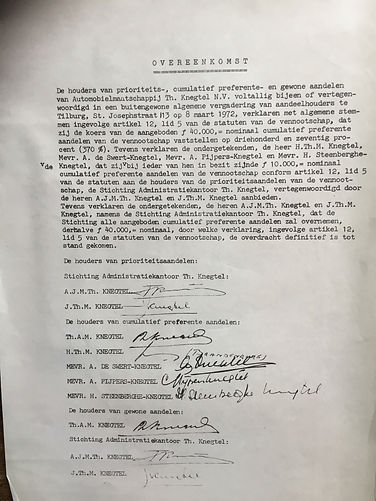
On January 6, 1951 the Knegtel garage is formally converted to a public limited company and is called Automobiel Maatschappij Th. Knegtel NV with Theo Knegtel as major shareholder. The object of the garage is described in more detail: 'The object of the company is to manufacture and trade in motor vehicles, manufacture and trade in parts for motor vehicles, to operate a car garage, to participate in other companies with similar interests or similar purpose and the performance of all things connected with this in the broadest sense'. There are 6 priority shares, 4 of which are owned by Theo and Jan and Fons each get one. The other Knegtel children receive a share package that is taken over in 1972 at 370% of the original value.
In 1951 the Ford fleet sales competition takes place under the motto "All hands on deck". The management boards of the Ford dealers will meet in Limburg on the occasion of this sales competition.
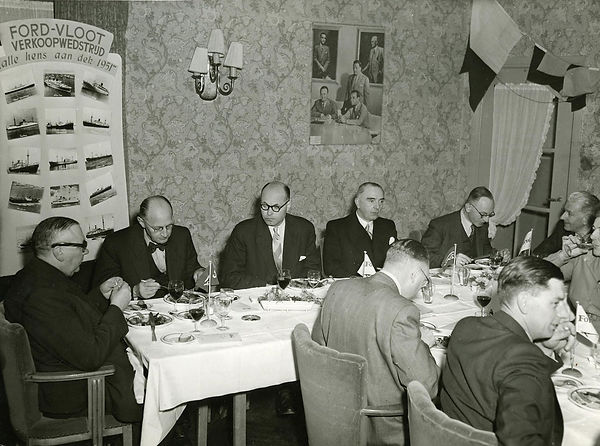
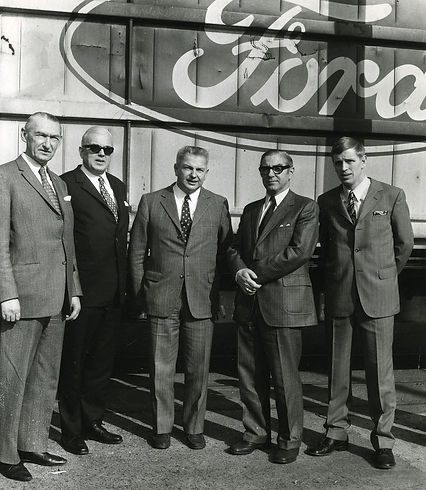
From left to right Messrs. Fisette, van de Hombergh, Maarsman, Knegtel and Reijders.
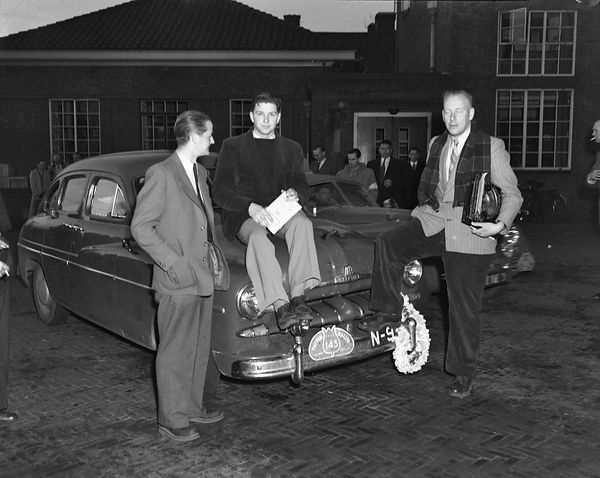
In that year, the Ford Vedette is also used by Jan to drive the Tulpenrally together with the Ford Dealer from Haarlem, Wim Mutsaerts.
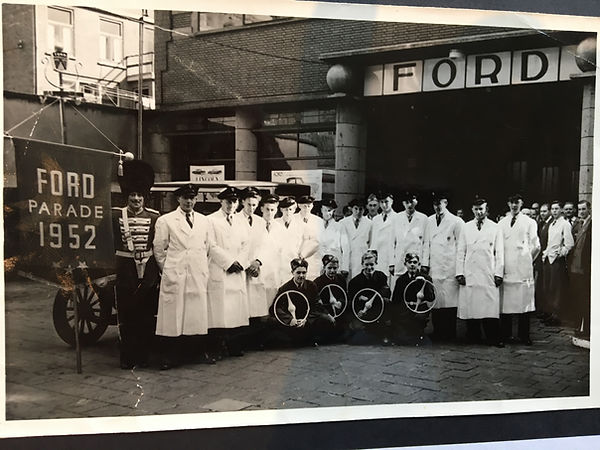
In 1952 Knegtel holds its own car parade and, as usual, goes big.
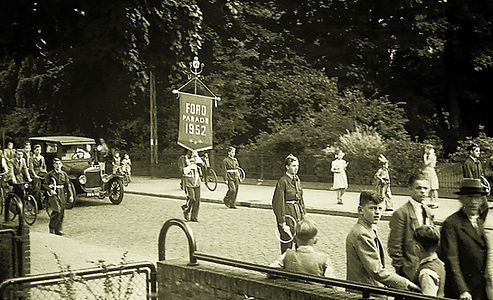
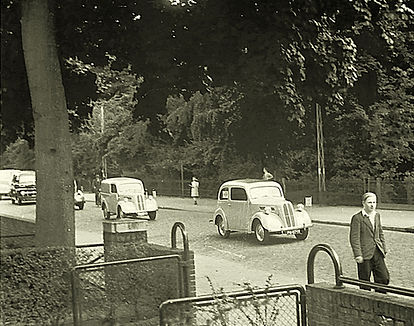

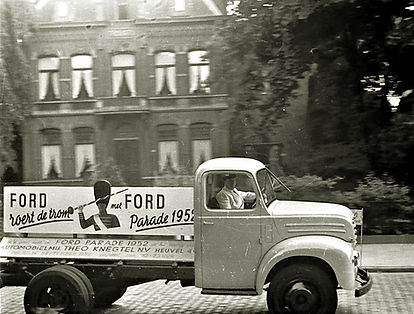
In 1954 Ford has been established in the Netherlands for 30 years. During a festive gathering, Theo addresses the management and other dealers as the oldest Ford dealer in contract years.
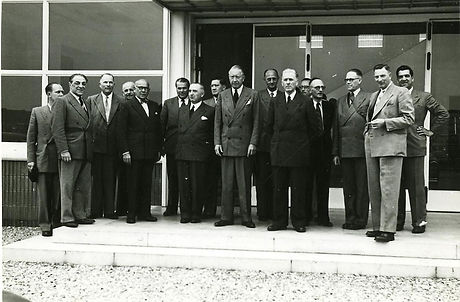
.jpg)
In 1954 Theo accompanied the Ford dealers for a visit to the Ford factories in Genk and Mulhouse. It will unfortunately turn out to be his last business activity.
The year 1954 becomes an important turning point in the company. As a result of rapid growth in both the car market and the diversity of Ford products, Ford has decided to strip existing dealerships in the larger towns of half of the products in favor of newly recruited dealers. Uniformly, a new system was introduced in which two lines were distinguished: a blue and an orange line. From then on, the American and German Fords belonged to the Blue Line, while the English Fords (with the French Fords, which were later discontinued) were housed in the so-called Orange Line.
As Knegtel was also a 50% partner of the business in Breda, she was hit twice. After very emotional negotiations, Knegtel was allowed to set up a second company, but they had to sell Breda. The fact that things did not go smoothly between Theo and his brother-in-law Jan van den Heuvel may also have contributed to this. Documents show that Jan van den Heuvel's Automobielmaatschappij 'Brabant' had a contract since 1953 with Stokvis for the purchase of Austin, Chrysler and Plymouth.


Theo, who had put in 200% effort, had to pay for his efforts with an angina pectoris that forced him to withdraw from the company completely at 61 on doctor's advice.
1955 - 1975: Expansion
3.1. Ringbaan East starts
Fons enthusiastically put his weight behind the foundation of the new company for which he chose the 'Orange' English and French product line. He designed a modern new building on the site next to the recently purchased paint shop on Ringbaan Noord/Frans Mannaertsstraat.
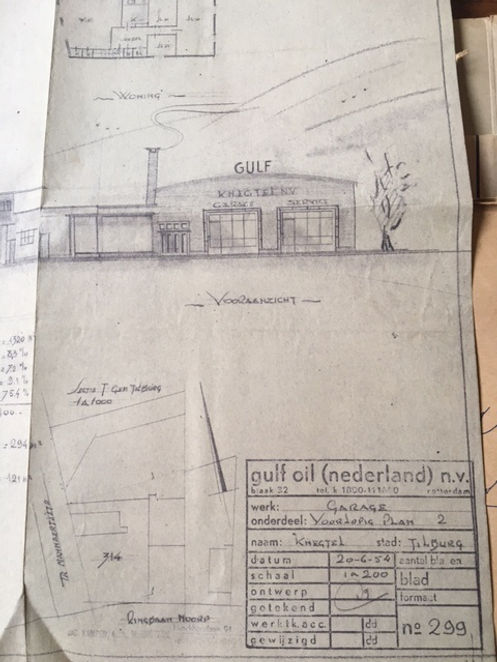
Just before the tender for this, the more favorably located building of v/h Wassing & Verbruggen on the Ringbaan Oost was offered. It was readily available and large enough to house the paint shop as well. Agreement was reached to purchase the site and exchange the Ringbaan Noord sites. And so, in 1955, the new branch was opened at Ringbaan Oost 134. This branch was called "Zuid Nederlandse Automobiel Mij. De Ringbaan".
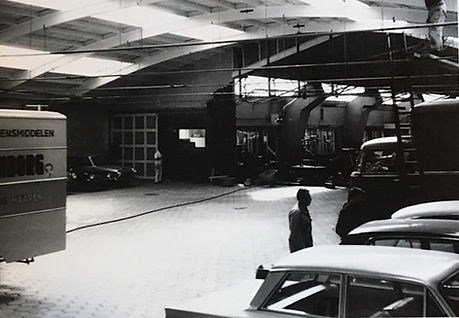

Ringbaan Oost under construction

_ORG20x15.jpg)
The new hall was often used for shows from the French line such as Packard (left photo) and Peugeot.
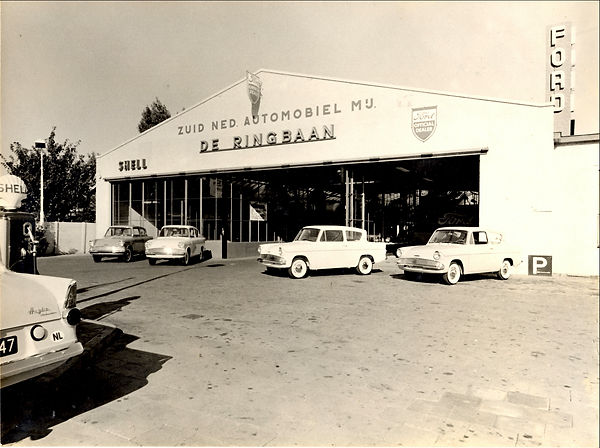
The Ringbaan Oost specialized in the 'Orange' line and sold the English (Zodiac, Zephyr, Cortina, Anglia, Consul, Prefect, Corsair) and French Ford series (Vedette, Chambord, Vendome, Versaille), trucks and vans (Thames Trader , Transit). The establishment was profitable mainly due to the sale of the smaller models (Anglia, Prefect) and the sporty performance of Ford in European rallys (Cortina, Escort, Capri). Fons was assisted by G. Wortelboer and M. Buijs sales as well as Jo Heijnen, workshop management, Rinus van Beek, Piet van Bladel and Jef Smulders, Service department Bert Oerlemans, Bert van Loon, Berry van Berkel, Warehouse Jo Kruisselberge and Accounting Ad vd Gevel.

fltr: Berry van Berkel, Bert van Dijk, Martin Buijs, Bert van Loon, Ad van de Gevel, Piet van Bladel and Jo Heijnen
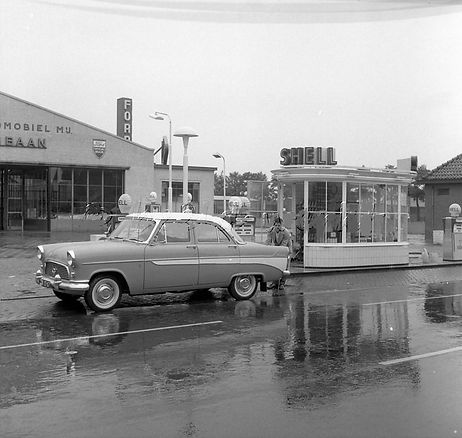

The Blue Line, the American and German Fords, were sold and maintained from the Heuvel location. To create more space, the garden of the Heuvel 42 building was purchased and completely built upon in 1958, allowing for a significant expansion of the garage and workshop.
The blue line, the American and German Ford, was sold and serviced from the Heuvel site.
In 1959, the new generation of FK Taunus Transit vans comes on the market. The FK Taunus Transit is produced at Ford in Germany in the 1950s. This one mainly had to compete against the Transporter from Volkswagen. In England, Ford produced the Thames model, which competed with BMC's 'Vans'.
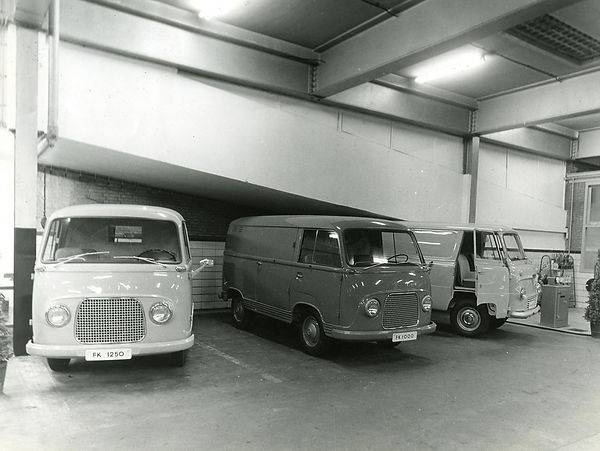
The FK Taunus Transits
Staff parties were held regularly. This was also the case in 1958 when the staff, with their families, were invited for a trip to Wuppertahl.
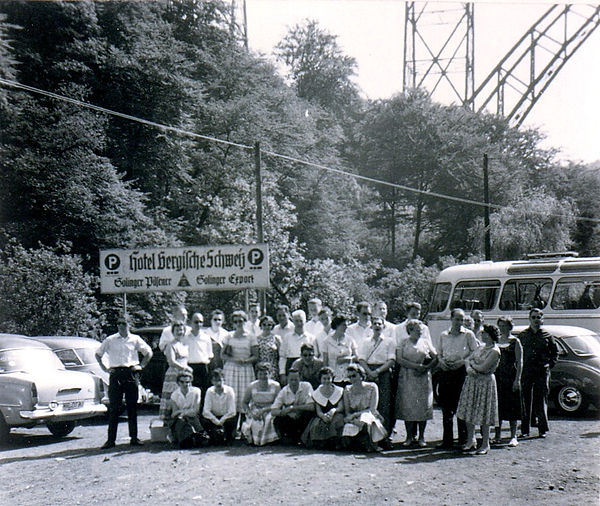
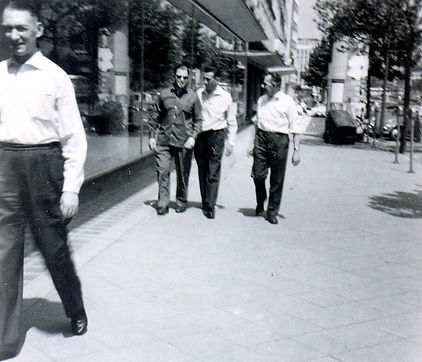
fltr: Janus van Gool, Jan Knegtel, Ad van Roessel and Herman Hamers
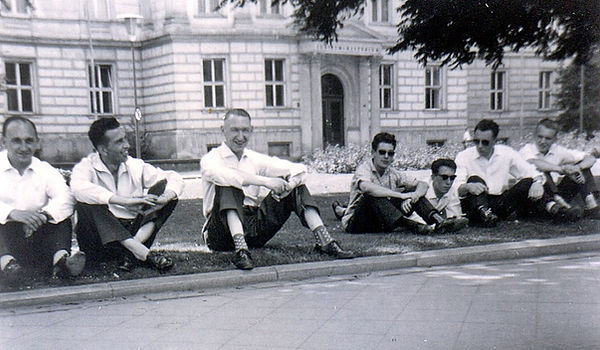
fltr: Toon Vekemans, Ad van Roesel and in
the middle Janus van Gool.
In March 1963 they celebrated the 50th anniversary of NV Automobielmaatschappij Th. knegtel. The joint workforce at that time was 120 people. In a personal message to the staff members, Theo expressed his gratitude for their cooperation and dedication. All employees were offered a party bonus and an extra allowance for each year of service. It is remarkable that a few people have been working for the company for more than 35 years and a dozen employees for more than 25 years. 'One could hardly wish for a clearer confirmation of the good spirit and the friendly relations that have always prevailed in this working community' , according to the Nieuwe Tilburgse Courant in 1963.
3.2. Renovation of the Heuvel
The plans for the expansion and modernization of the showroom on the Heuvel are now awaiting approval at Bouw en Woningtoezicht in Tilburg. In addition, the facade will be widened to include the part of the building which currently still houses a byouterie shop. The capacity of the showroom, which will also become deeper, will then be able to show 20 small or twelve large passenger cars. They had wanted to use this new business space on the occasion of the 50th personal and business anniversary, but this was not possible due to the great stagnation in the approval of the plans. This was finally carried out in 1964/65.


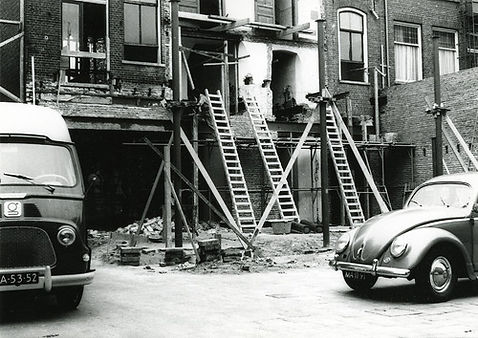
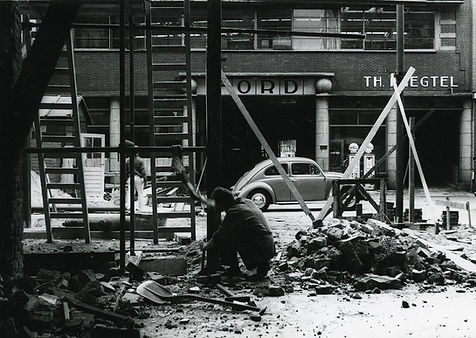
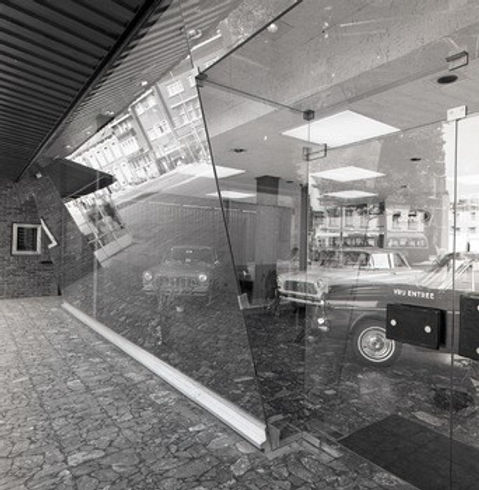
The shop window on the Heuvel side was given a unique slanted pane to make it easier to see inside without reflecting the light. The disadvantage was that many hit their heads that way.
The building got a completely different look.

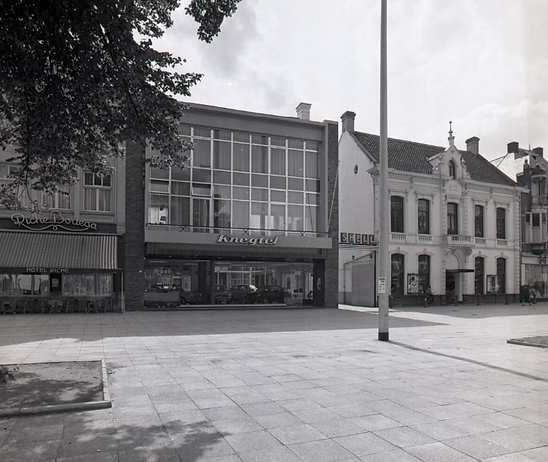
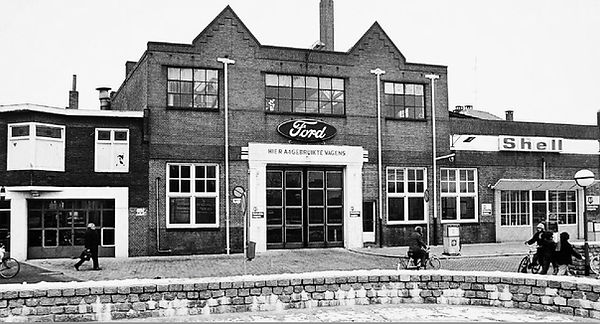
Among other things, a larger showroom was built and in 1965 the old Frans Verbunt building on Piusplein was added. The company on de Heuvel now specialized in second-hand 'A1' cars in addition to the sale of American and German Fords.
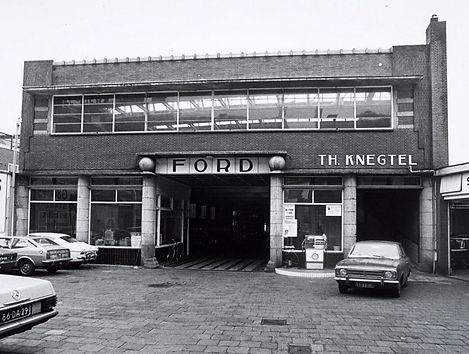
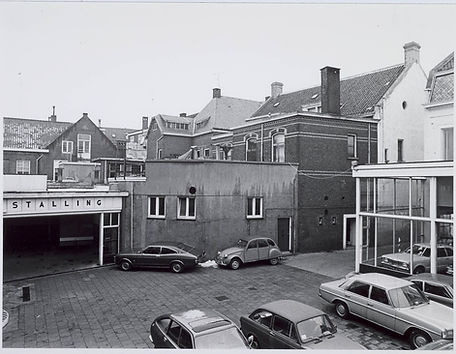
Workfloor entrance
%20Julianastraat_%20naa.jpg)
Showroom of garage Knegtel on the Princess (later Queen) Julianastraat.
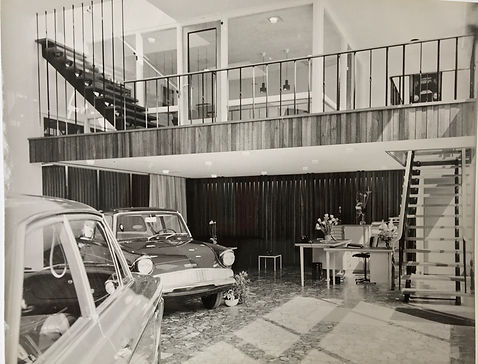

The new and enlarged showroom was opened on April 28, 1965. The office areas above the showroom were also renovated. The total surface area then covered 4300 m2 from the Heuvel to Piusplein. This created the strange situation that the company had three house numbers on the Heuvel, four on the Prinses Julianastraat (now Heuvelring) and two on the Piusplein.
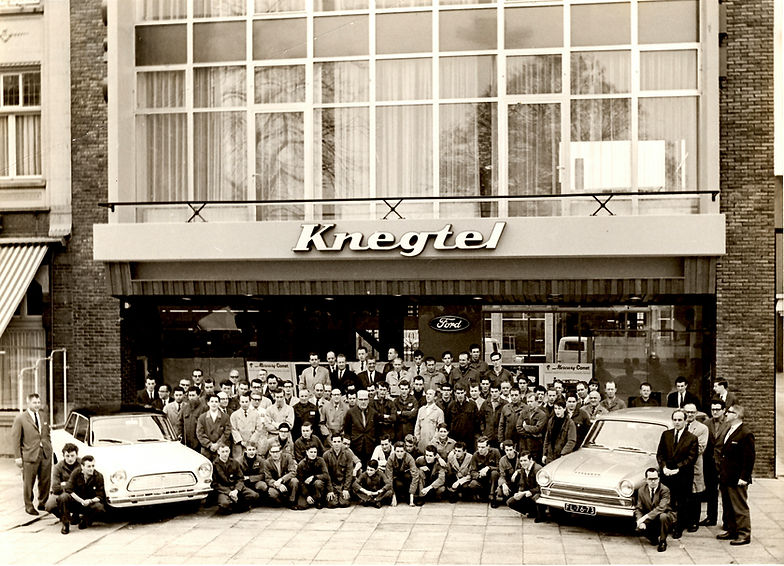
Entire staff at the opening after the refurbishment. Far left Jan and far right Fons.
3.3. Opening Spoorlaan
Unfortunately, shortly afterwards the parent company in the city center was made inaccessible due to the reconstruction of the Heuvel and Piusplein, introduced by the municipality, and Knegtel was forced to move. The Ringbaan Oost building (3200m2) was too small to include the Heuvel (4300m2). The solution for this came when the building of the wool fabric manufacturer Frans Mutsaers & Zn. was released on the Spoorlaan. It was converted into an enormous eye-catcher under the supervision of architect E. van der Valk and contractor Van Ruts' Bouw en Montage NV.


Concentrating the companies on the Spoorlaan was beneficial for accessibility and personal service for the customer and for increasing efficiency, but was not received with enthusiasm by De Ringbaan employees, who found it difficult to give up their own organization.
The city buses advertised with the slogan 'This bus also takes you to Knegtel'. The space released on the Heuvel site was used to create an American parking garage where approximately 200 cars could find a parking space with the option of expanding the capacity to 400 cars.
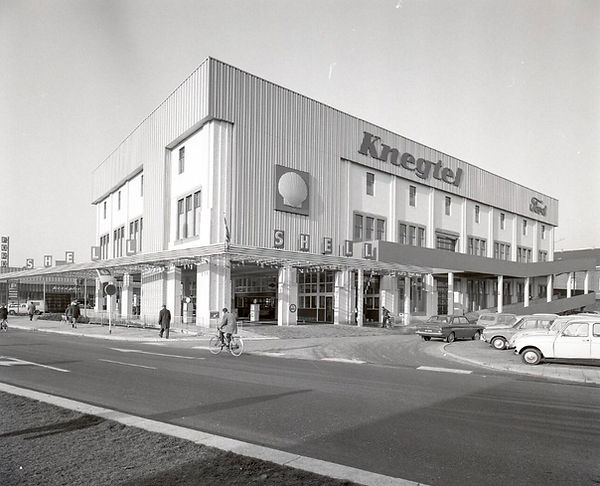


The new building was opened in 1967, with a floor area of 6000m2.

From left to right: Mayor Becht, Theo Knegtel and Mr Edwards, dir. Ford Factory Amsterdam. on the foreground Tim, Joseph, Fons, Max and Marieke.
The entire interior was by American standards: the test street was ultramodern, the warehouse four high, the driveways to the top floor were very special for that time. All sellers had their own desks on a raised rack. There was an on-line connection to the factory, avant-garde architecture with direct-eye contact and it was fully intercom-equipped by means of a pneumatic tube system.
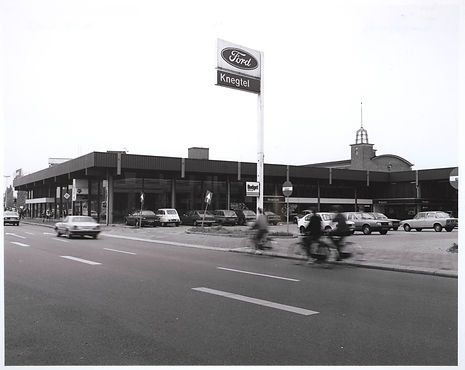
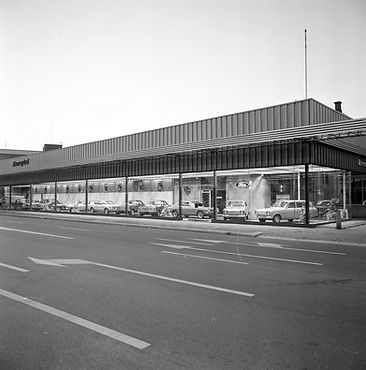
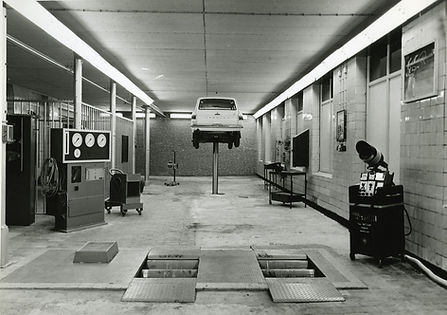

The mixed German, English and American models did indicate that Ford was an international brand. From this new building, between 1000 and 1200 cars were sold annually.
In 1969 the location of "De Ringbaan" was sold to the Gebr. Nefkens (Peugeot), who continued the garage activities in this.
3.4. 50th Anniversary Ford Dealership
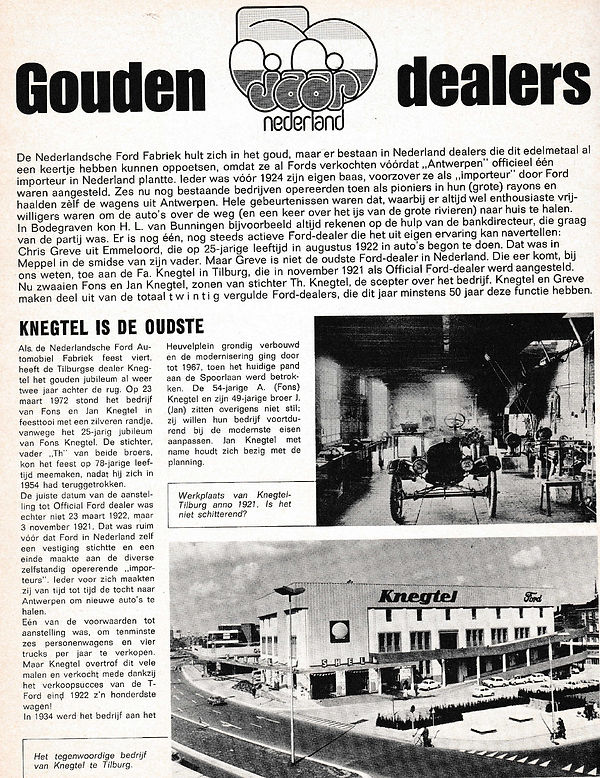
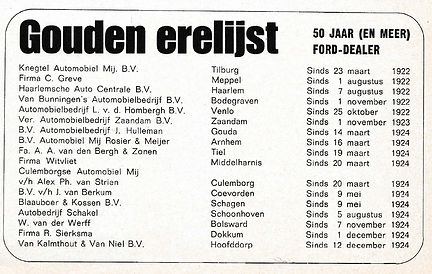
On March 23, 1972, the 50th anniversary as an official Ford Dealer was celebrated (not to be confused with the 50th anniversary of the garage itself in 1963) and the 25th anniversary of Fons Knegtel in the business. Garage Knegtel was the first dealer in the Netherlands to achieve this anniversary. In that year it employed 110 people. Prior to the official day, Knegtel celebrated the party for staff and family on March 18.
That day started with a visit to the Ford factories in Genk and the car museum in Hallen.
Afterwards, the family and the entire staff plus ladies (approx. 200 p) went to Landgoed Schaluinen for the party. Van Gool, who has been associated with the business for forty years, gave a speech on the history of the company and, on behalf of the staff, presented a beautiful photo of the workshop at Heuvel 44, which was unveiled by Marie-Christine.
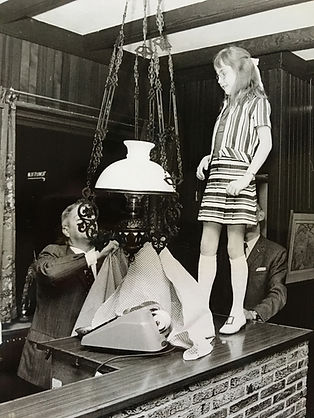
Fons Knegtel's 25th anniversary was also celebrated. Els Knegtel received a beautiful bracelet in addition to flowers. The couple received an antique pendant lamp from the staff.

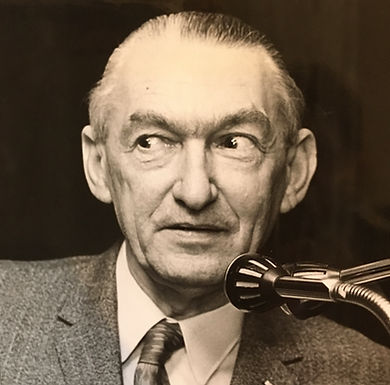
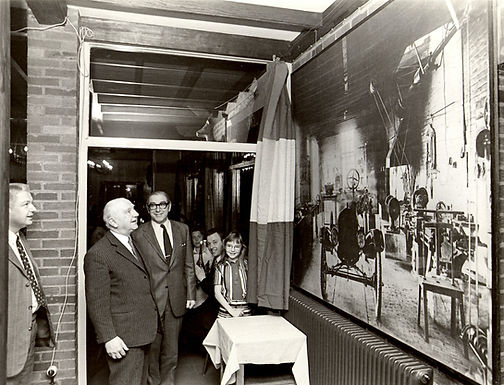


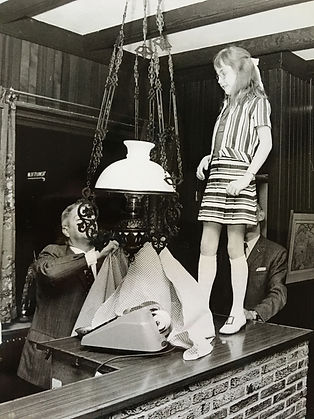
On March 23, the official Golden jubilee was celebrated amid great international interest. Present on behalf of Ford were
T. Becket, the Vice President European Sales from London and I. Edwards, the Regional Manager European Sales from Brussels as well as Messrs Stolk and Peddemors from Ford Netherlands.
Mr Peddemors from Ford congratulates the Knegtels

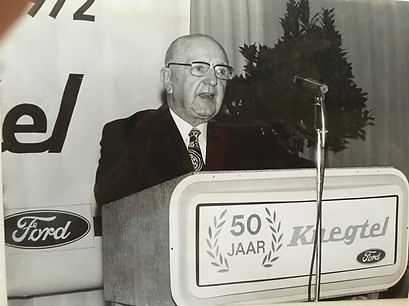
Everyone thought it was a pleasure that the elderly Theo Knegtel himself, who in 1912 still had to apply for permission to do business, was alive and well and spoke.
T. Becket, Ford's Vice President of European Sales addresses the family and guests.
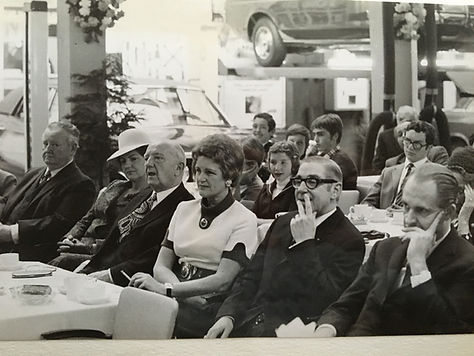
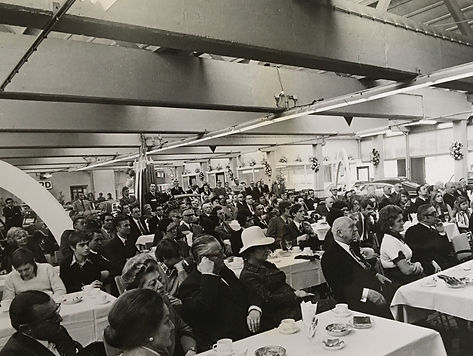
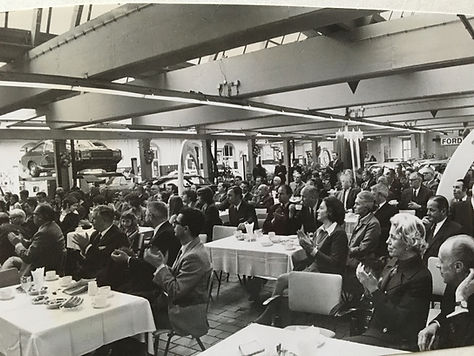

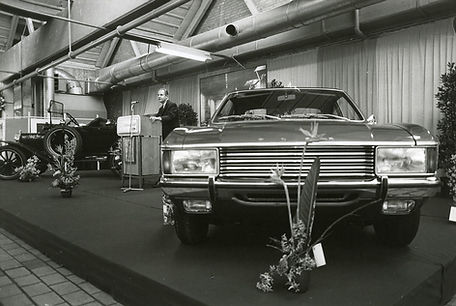
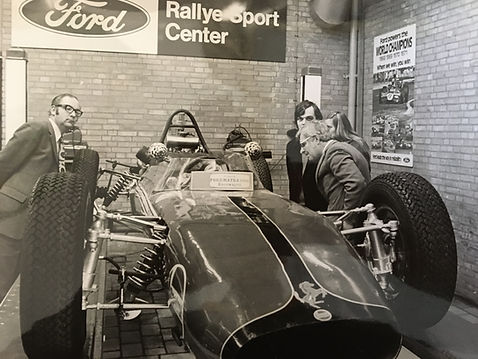
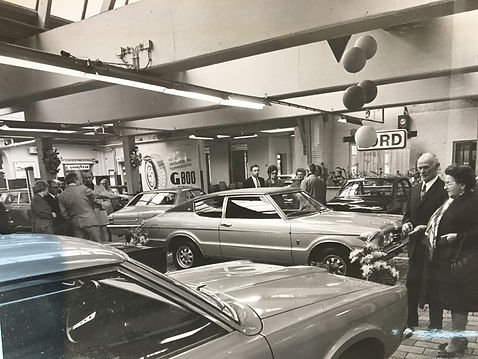
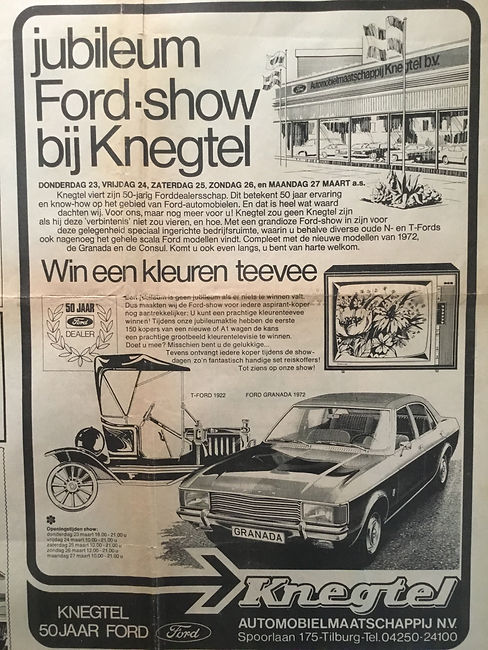
A special car exhibition was organized on Spoorlaan under the motto 'Automotive evolution in 50 years'. With the cooperation of the Automuseum in Drunen, there were 9 old cars from the early 1900s. Cars that every driver could get to work in the event of a problem with a piece of wood and a piece of string and a paper clip. There were, among other things, a T-Ford Roadster with carbide lamps from 1911, a T-Ford with beautiful wooden spokes from 1914 and an A Ford from 1928. These old cars were insured for fl. 50,000 each. The exhibition showed all intermediate stages up to the most modern cars at the time, including a Matra Formula II racing car with a Ford engine. Naturally, the new line was also on display, and in particular the presentation of the new Consul and Granada.
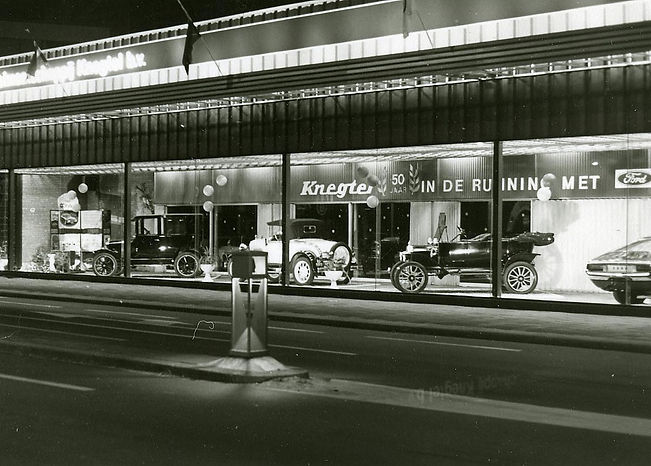
The management of Knegtel had indicated that they would prefer to receive money as gifts instead of flower arrangements. This amount would be made available to the society for the disabled, Rolita. A lottery was also set up for Rolita, for which Knegtel donated a lottery ticket worth fl 25 when purchasing a new or used car. The main prize was a color TV.

.jpg)
Present at the selection of the winner are Messrs. Kuipers, Wortelboer, van Gool, Fons, Jan and notary Simons.
The prize will be handed over personally. One of the garage mechanics was the lucky winner.
.jpg)
There is another anniversary in that year 1972: Chief mechanic Herman Hamers has been working at Garage Knegtel for 40 years.

He receives an award from Mayor Becht for this special milestone.
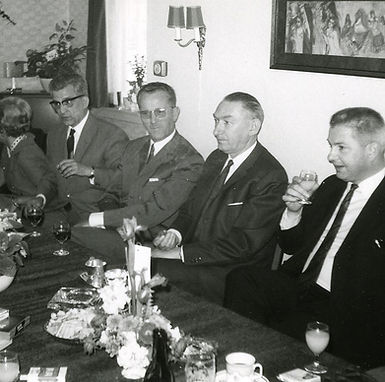
Further on, the rest of the board: Frans Geerts, G. vd Werf, Janus van Gool and Jan Knegtel
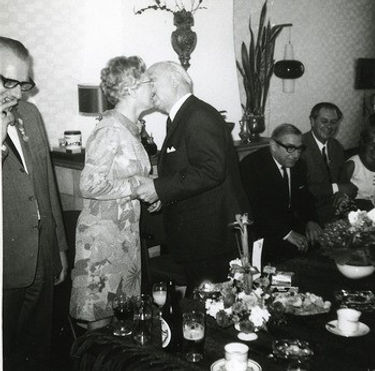
Theo takes the opportunity to congratulate Mrs Hamers. Fons is sitting next to Theo

The jubilee makes a special tour that day in a Ford Sedan from 1928 that is still well-known to him. In the back accompanied by Fons and Els Knegtel
In March 1974 Ford Netherlands celebrates its 50th anniversary. The dealers are invited to visit the Ford factory in Immingham, UK. This also applies to the management of Knegtel.

Henry Ford also came to the Netherlands for the anniversary. During dinner Tineke Knegtel-Steenberghe is Henry Ford's table lady.
From left to right Janus van Gool, Gerrit Wortelboer Deputy director, Jan Knegtel Director of administration, Fons Knegtel, Technical director and Kuypers, Head of administration
On November 14, 1974, the sad news comes that Theo has passed away at the age of 82.
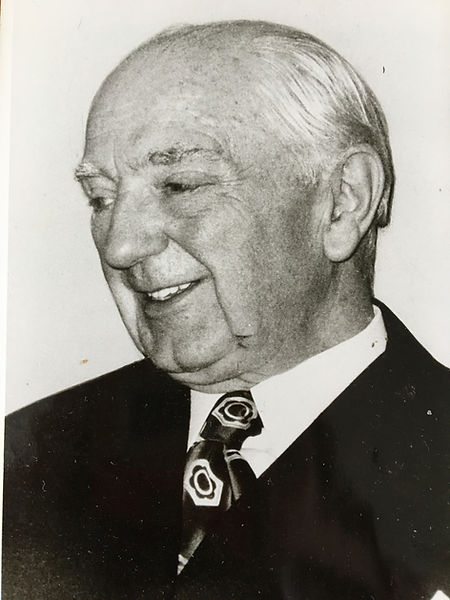
1976 - 1980: Outfitting

4.1. Demolition of the Heuvel
As long as the municipality had not yet started implementing the Heuvelpoort plan, the building on the Heuvel was used for the sale of second-hand cars, the so-called A1 cars, and as a Heuvel Parking for the buying public in the Heuvelstraat. Together with the owner of the property of Riche Knegtel tried to develop a project on the site himself, but in 1978 the building was definitively expropriated and demolished by the municipality.

Building on the Heuvel just before demolition. Hotel Riche is already empty.
The departure of De Heuvel created the opportunity to renew the sales/showroom accommodation on Spoorlaan. Of the existing buildings on the Spoorlaan, only the petrol station with launderette and the commercial vehicle repair department with the floors above (passenger car repair and damage department) remained standing. They did receive a thorough refurbishment and were adapted to the new building. All other buildings, showroom, offices and service building for passenger cars were demolished. In 1977, the building of Nieuwsblad van het Zuiden and Betapress, Spoorlaan 179, was purchased to make it possible to access the rear of the company. At that time, Knegtel had a total area of 12,000 m2.

The parking and storage of cars was placed on the floor of the buildings that remained. The parking space on the first floor could accommodate ninety cars, mainly intended for so-called contract customers, while the company's own cars were stored on the second floor.
On the site (280m2) where the warehouse was located, the service department was build that continued to the rear of the complex and covered a total of 1650 square meters. The showroom became a single-storey affair with only a small floor for office space overlooking the courtyard and showroom.


4.2. Dongen branch
At that time, Knegtel worked with sub-dealers in the towns around Tilburg. These were Garage Kimenai in Dongen, De Lind in Oisterwijk, Van Rijn in Hilvarenbeek, Van Dorst in Rije, Van Beurden in Udenhout, Kluytmans in Haaren, Van Bladel in Loon op Zand, Baeten in ?, Persons in Moergestel, vd Wou in Dongen , van Vught in ? and van Zelst in Sint-Michielsgestel. However, Ford Nederland thought that Garage Knegtel's territory was getting too big, so they were more or less forced to give up some sub-dealers. Company Kimenai in Dongen decided to focus entirely on Peugeot, so in the interest of a smooth service to Ford customers it was decided to start its own branch in Dongen. In 1979 a branch was opened on the Tichelrijt industrial estate. The five employees who came to work here specialized in both the sale of new and used cars and their service. There was also a gas station. The total business area was 1000 m2 covered and 1000 m2 outside.

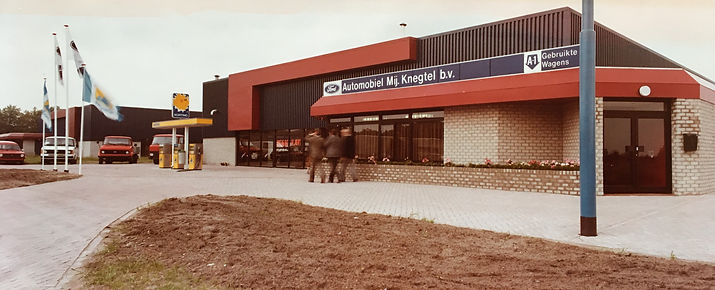

4.3. Bankruptcy
However, the timing was bad. On December 5, 1980, Garage Knegtel came to an end due to the bankruptcy of the operating company, one of the company's BVs. This was partly due to the sharp decline in car sales in connection with the second oil crisis of 1979, the fact that Ford did not come up with new models and mainly because Ford had abolished the consignment scheme. Garage Knegtel now had to pay for the stock of cars in one go and not only after the cars were sold.
In 1979 35% fewer cars were sold. There was also less and less to do for the people on the workfloor. Short-time working had already been requested for this branch of the company. The fact that public interest in Ford had declined was due to the problems at the Ford company. For example, new models were always too late on the market. Furthermore, there was increasing competition from the Japanese car industry.
The bank already saw the storm looming and withdrew its credit line over the weekend. All this in a period after the major investments of recent years. For 53 men, layoffs were requested. The fact that the bank had taken this decision on 5 December made it all the more sour.
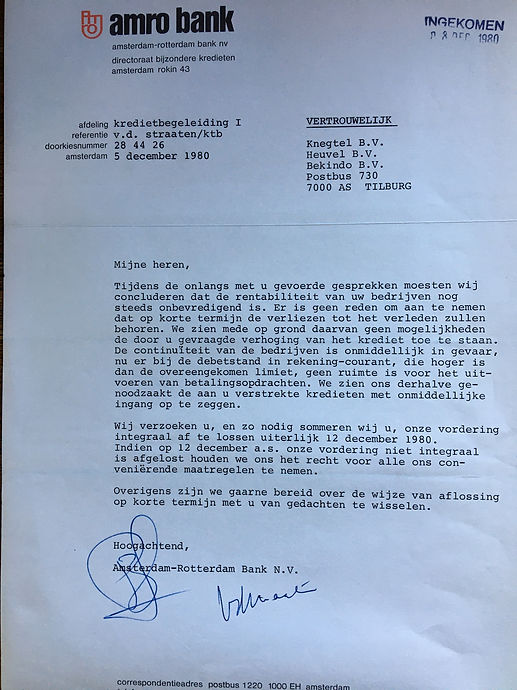
“It would have been profitable if we had not made such large investments in 1978,” said Jan Knegtel in the Algemeen Dagblad of 18 December 1980. “We had invested on a healthy basis. But when the sales remain far below the estimate, with a marginal company as a car company it can happen quickly. A search is now underway for a company to take over the business. I can't imagine not having a candidate showing up for such a brand-new company. In addition, we have a clientele of about 4000 people. And they are now without a Ford dealer.” The painful thing about it all, Knegtel thinks, is that there is a comeback for Ford this year. “The craze and the price advantages regarding the Japanese car is over. Healthy competition is now possible again, because the price level is the same again. The Ford Escort has been named Car of the Year, which is always a strong asset. It is a very bitter pill to give up a case while recovery is within reach," says Knegtel.
The fact that the total car sales went badly is shown by the fact that Ford Nederland itself also went bankrupt in 1981 and was subsequently re-established in a modified form.
The buildings on Spoorlaan were housed in a management company called Heuvel BV, with the aim of renting out the buildings. Most of Garage Knegtel's buildings in Tilburg and Dongen were leased to Ford dealer Obam from Eindhoven, who also took over some of the staff. The large showroom became a bowling center. The buildings were initially let through Heuvel BV and later through Taminiau multi-company building. Tenants of a very different background; a dance school in the attics and a disco/nightclub (salsa) in the almost unlettable printing building of Het Nieuwsblad with a very high (18 m) ceiling. From the proceeds of the rent, the Management Company paid the suppliers injured by the bankruptcy for another 10 years.
In 1998 Jan retired and a buyer was sought for the management company. It was sold in 1998 to a consortium consisting of the construction company Pepping from Kaatsheuvel and the Hollandse Betongroep (HBG) who, together with the municipality, were to carry out the development and construction of the site.
4.4. Demolition Knegtel site
In 2002, the Knegtel site (10,000m2) in Tilburg was completely demolished. This included the remaining buildings of the former Wollenstoffen Fabriek Frans Mutsaerts (owned by the Knegtel family), the former Garage Knegtel (later Obam), the Brimon bowling alley and the building of Het Nieuwsblad van het Zuiden, which was purchased in 1977 on the corner of Spoorlaan / guest house ring).
In total, the Knegtel site near the NS Station in the center of Tilburg (as it is still popularly known) now has 25,000 m² of office space, 65 apartments and a parking garage (called Parking Garage Knegtel) for 600 cars.
The name of the parking garage, Garage Knegtel, was announced to Jan Knegtel, who represented the family, during a formal meeting of Interim Commissioner of the Queen N. Brabant, Johan Remkes and the mayor of Tilburg Johan Stekelenburg. Mayor Stekelenburg recalled the significance for the city of Tilburg of the name (Theo) Knegtel during the twentieth century and that the city council had unanimously reached this decision.
